Word Explanation
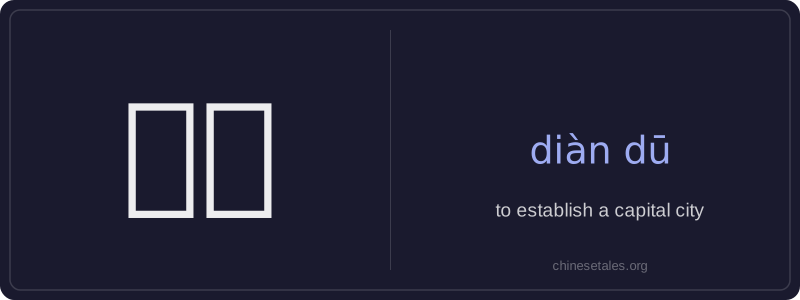
‘奠都’ is a formal, literary verb meaning 'to establish (a) capital city' — that is, to officially designate and found a city as the political and administrative center of a dynasty, state, or new regime. The character 奠 (diàn) originally means 'to lay the foundation' or 'to establish solemnly', often with ritual connotations; 都 (dū) means 'capital city' or 'metropolis'. Together, they convey the act of ceremonially founding a capital, emphasizing legitimacy, permanence, and historical significance.
This term appears almost exclusively in historical, academic, or official contexts — such as histories of Chinese dynasties, government announcements about new administrative centers, or scholarly discussions of urban development. It is not used in everyday speech or for modern municipal planning without rhetorical or symbolic weight. Unlike neutral terms like ‘建都’ (jiàn dū), ‘奠都’ carries a stronger sense of solemn inauguration and foundational authority.
Example Sentences
Related Words
国语
‘Guó yǔ’ literally means 'national language'—
无论谁
‘无论谁’ (wú lùn shéi) is a pronoun meaning
外语
‘外语’ literally means ‘outside language’ —
不对
不对 (bù duì) literally combines 不 (bù), meani
我的
我的 (wǒ de) is a possessive pronoun meaning 'my'
违规
违规 (wéi guī) literally means 'to violate rules
亲笔
‘亲笔’ literally means ‘one’s own hand’—comb
面条
‘面条’ (miàn tiáo) literally means ‘flour str