Word Explanation
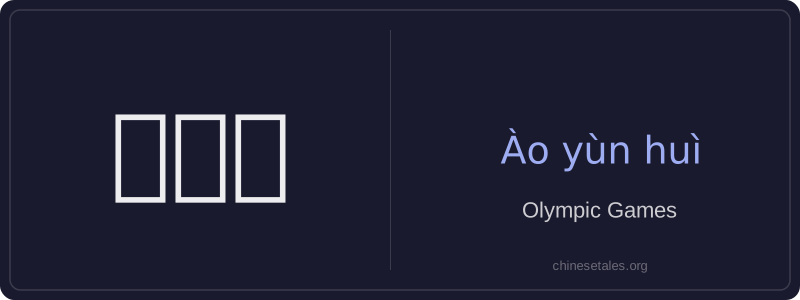
'奥运会' (Ào yùn huì) is the standard Chinese term for the Olympic Games — the world’s premier international multi-sport event held every four years. The word combines three characters: '奥' (Ào), short for '奥林匹克' (Ào lín pǐ kè, 'Olympic'), borrowed from the Greek 'Olympia'; '运' (yùn), meaning 'sports' or 'athletic activity', as in '运动' (yùn dòng); and '会' (huì), meaning 'gathering', 'assembly', or 'conference'. Together, they literally convey 'Olympic sports assembly' — a concise, formal compound widely used in news, official documents, and everyday speech.
The term refers specifically to both the Summer and Winter Olympics, though context usually clarifies which. It's a proper noun and always capitalized in Chinese writing (though Chinese lacks capital letters, it's treated as a title). Major host cities like Beijing (2008, 2022) are often associated with the term, reinforcing its connection to global venues and national prestige.
Example Sentences
Related Words
国语
‘Guó yǔ’ literally means 'national language'—
无论谁
‘无论谁’ (wú lùn shéi) is a pronoun meaning
外语
‘外语’ literally means ‘outside language’ —
不对
不对 (bù duì) literally combines 不 (bù), meani
我的
我的 (wǒ de) is a possessive pronoun meaning 'my'
违规
违规 (wéi guī) literally means 'to violate rules
亲笔
‘亲笔’ literally means ‘one’s own hand’—comb
面条
‘面条’ (miàn tiáo) literally means ‘flour str