Word Explanation
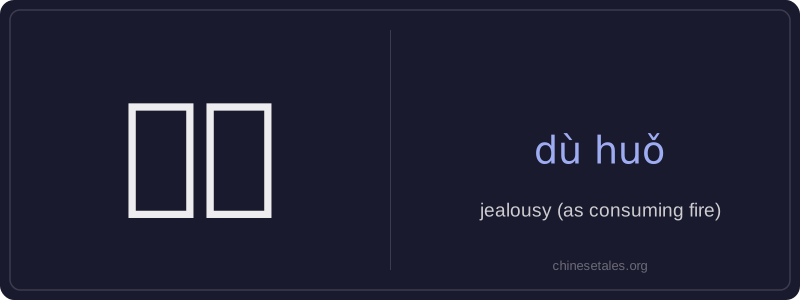
'妒火' literally means 'jealousy fire' — a vivid metaphor combining 妒 (dù, 'jealousy') and 火 (huǒ, 'fire') to convey jealousy as an intense, burning, consuming emotion. Unlike neutral terms like 'jealousy' in English, this compound evokes heat, agitation, and potential destructiveness — as if the feeling itself is a raging flame inside the person.
It’s commonly used in literary, dramatic, or emotionally charged contexts — in novels, films, or passionate speech — to emphasize how overwhelming and painful jealousy can feel. While not everyday conversational vocabulary, it appears frequently in written Chinese and formal speech when describing deep emotional turmoil. The imagery reflects a long-standing cultural association of strong negative emotions with physical heat, similar to expressions like 'heartburn' in English but far more intense.
Example Sentences
Related Words
国语
‘Guó yǔ’ literally means 'national language'—
无论谁
‘无论谁’ (wú lùn shéi) is a pronoun meaning
外语
‘外语’ literally means ‘outside language’ —
不对
不对 (bù duì) literally combines 不 (bù), meani
我的
我的 (wǒ de) is a possessive pronoun meaning 'my'
违规
违规 (wéi guī) literally means 'to violate rules
亲笔
‘亲笔’ literally means ‘one’s own hand’—comb
面条
‘面条’ (miàn tiáo) literally means ‘flour str