Word Explanation
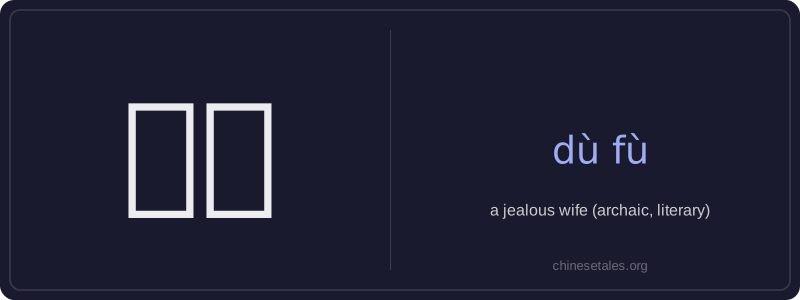
‘妒妇’ literally combines 妒 (dù), meaning 'jealousy' or 'envy', and 妇 (fù), meaning 'married woman' or 'wife'. Together, it forms a literary, slightly archaic noun referring specifically to a wife who is excessively jealous—especially regarding her husband’s attention, affection, or interactions with other women. The term carries a strong negative connotation and often appears in classical literature, historical dramas, or satirical writing to portray a stereotypically possessive, suspicious, or domineering spouse.
Unlike modern neutral terms like 嫉妒心强的妻子 (a wife with strong jealousy), 妒妇 is stylistically elevated and emotionally charged; it implies moral judgment and social disapproval. It is rarely used in casual speech today and is more common in storytelling, idioms (e.g., 妒妇之心), or rhetorical criticism. The word reflects traditional gendered expectations and historical attitudes toward female emotion in Chinese society.
Example Sentences
Related Words
国语
‘Guó yǔ’ literally means 'national language'—
无论谁
‘无论谁’ (wú lùn shéi) is a pronoun meaning
外语
‘外语’ literally means ‘outside language’ —
不对
不对 (bù duì) literally combines 不 (bù), meani
我的
我的 (wǒ de) is a possessive pronoun meaning 'my'
违规
违规 (wéi guī) literally means 'to violate rules
亲笔
‘亲笔’ literally means ‘one’s own hand’—comb
面条
‘面条’ (miàn tiáo) literally means ‘flour str