Word Explanation
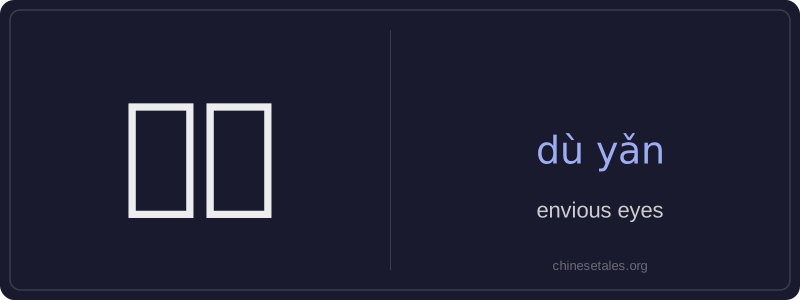
‘妒眼’ literally means 'envious eyes' — a vivid, figurative noun combining 妒 (dù, 'envy' or 'jealousy') and 眼 (yǎn, 'eyes'). It does not refer to actual eyes but symbolizes the intense, watchful, often resentful gaze of someone who feels jealous. This expression evokes imagery of sidelong glances, narrowed eyes, or lingering stares fueled by covetousness — commonly used in literary, descriptive, or slightly dramatic contexts.
The term appears frequently in classical and modern Chinese writing to portray emotional tension: for instance, describing how a rival watches someone’s success with silent bitterness, or how unrequited love manifests as a painful, longing stare. While grammatically a noun, ‘妒眼’ functions like a noun phrase — it can serve as subject, object, or appositive, but rarely takes modifiers like adjectives; instead, it’s often paired with verbs like ‘射出’ (emit), ‘投来’ (cast), or ‘充满’ (be filled with). It carries a subtle negative or critical connotation, implying moral weakness or emotional immaturity.
Example Sentences
Related Words
国语
‘Guó yǔ’ literally means 'national language'—
无论谁
‘无论谁’ (wú lùn shéi) is a pronoun meaning
外语
‘外语’ literally means ‘outside language’ —
不对
不对 (bù duì) literally combines 不 (bù), meani
我的
我的 (wǒ de) is a possessive pronoun meaning 'my'
违规
违规 (wéi guī) literally means 'to violate rules
亲笔
‘亲笔’ literally means ‘one’s own hand’—comb
面条
‘面条’ (miàn tiáo) literally means ‘flour str