Word Explanation
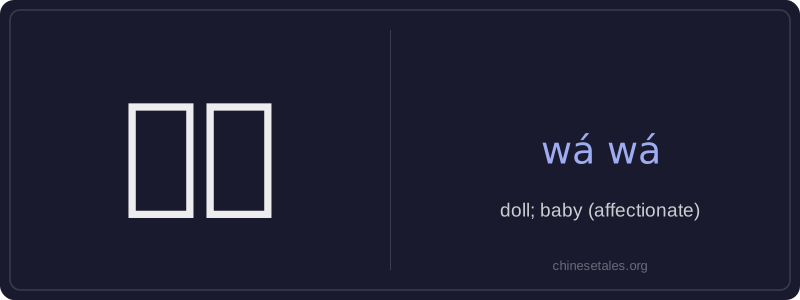
‘娃娃’ (wá wá) is a reduplicated noun formed from the character 娃, which on its own means ‘child’ or ‘baby’. The repetition adds affection, softness, and informality — much like English terms such as ‘little one’ or ‘sweetie’. It most commonly refers to a toy doll, especially one designed for children to hold or play with, but it’s also used affectionately to refer to real babies or young children, often by parents, grandparents, or caregivers.
The word carries warm, tender connotations and appears frequently in family settings, children’s stories, nursery rhymes, and casual speech. While it can technically apply to infants or toddlers, it’s rarely used for older children (e.g., not for a 10-year-old). Its tone is distinctly gentle and intimate — you’d never use it in formal documents or clinical contexts. In some regional dialects, it may carry additional nuances, but in standard Mandarin, its core meanings remain ‘doll’ and ‘baby’ in an endearing sense.
Example Sentences
Related Words
国语
‘Guó yǔ’ literally means 'national language'—
无论谁
‘无论谁’ (wú lùn shéi) is a pronoun meaning
外语
‘外语’ literally means ‘outside language’ —
不对
不对 (bù duì) literally combines 不 (bù), meani
我的
我的 (wǒ de) is a possessive pronoun meaning 'my'
违规
违规 (wéi guī) literally means 'to violate rules
亲笔
‘亲笔’ literally means ‘one’s own hand’—comb
面条
‘面条’ (miàn tiáo) literally means ‘flour str