Word Explanation
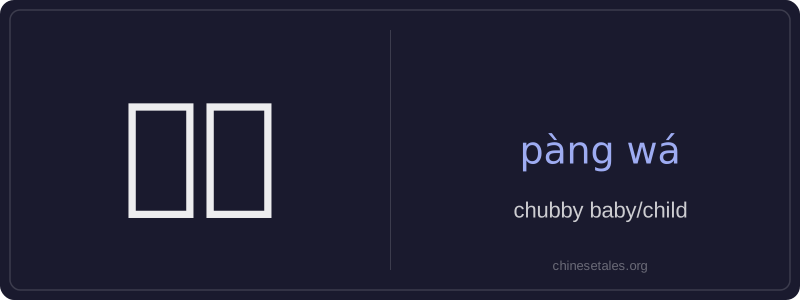
‘胖娃’ literally combines 胖 (pàng, 'chubby' or 'plump') and 娃 (wá, 'baby' or 'young child'), forming an affectionate, colloquial noun meaning 'chubby baby' or 'chubby toddler.' It conveys warmth and fondness—not judgment—and is commonly used in spoken Mandarin when describing infants or preschoolers with soft, rounded features. The term is especially popular in Sichuan and other southwestern dialects but widely understood across China.
Unlike formal terms like 婴儿 (yīng'ér, 'infant') or 幼儿 (yòu'ér, 'young child'), 胖娃 carries emotional nuance: it suggests health, cuteness, and nurturance—often implying the child is well-fed and thriving. It’s rarely used for older children or adults, and never in clinical or critical contexts. You’ll hear it in family conversations, photo captions, nursery rhymes, and marketing for baby products.
Example Sentences
Related Words
国语
‘Guó yǔ’ literally means 'national language'—
无论谁
‘无论谁’ (wú lùn shéi) is a pronoun meaning
外语
‘外语’ literally means ‘outside language’ —
不对
不对 (bù duì) literally combines 不 (bù), meani
我的
我的 (wǒ de) is a possessive pronoun meaning 'my'
违规
违规 (wéi guī) literally means 'to violate rules
亲笔
‘亲笔’ literally means ‘one’s own hand’—comb
面条
‘面条’ (miàn tiáo) literally means ‘flour str