Word Explanation
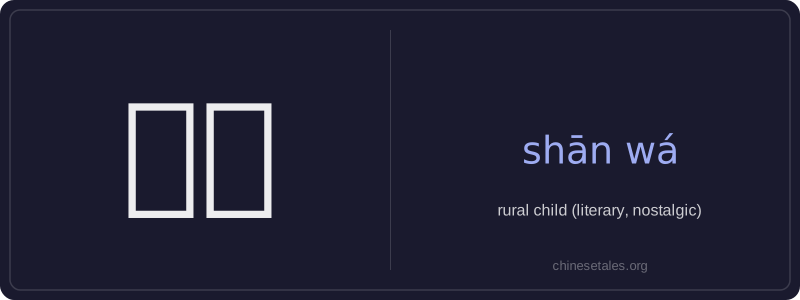
‘Shān wá’ literally means ‘mountain child’ — ‘shān’ (mountain) evokes rural, remote, or pastoral landscapes, while ‘wá’ (child) conveys innocence, simplicity, and youthful vitality. Together, the term carries strong literary and nostalgic overtones, often used in poetry, memoirs, or essays to evoke a bygone era of childhood spent in the countryside — unspoiled by modernity, closely tied to nature and traditional village life.
It is not a neutral demographic label like ‘rural child’ in sociological contexts; rather, it’s an affectionate, poetic construct imbued with warmth, longing, and gentle idealization. Writers use it to contrast urban alienation with rustic authenticity, or to reflect on personal roots and cultural memory. Though grammatically a noun, ‘shān wá’ functions more like a symbolic archetype than a referential term — rarely used in casual speech or official documents, but deeply resonant in artistic and reflective writing.
Example Sentences
Related Words
国语
‘Guó yǔ’ literally means 'national language'—
无论谁
‘无论谁’ (wú lùn shéi) is a pronoun meaning
外语
‘外语’ literally means ‘outside language’ —
不对
不对 (bù duì) literally combines 不 (bù), meani
我的
我的 (wǒ de) is a possessive pronoun meaning 'my'
违规
违规 (wéi guī) literally means 'to violate rules
亲笔
‘亲笔’ literally means ‘one’s own hand’—comb
面条
‘面条’ (miàn tiáo) literally means ‘flour str