Word Explanation
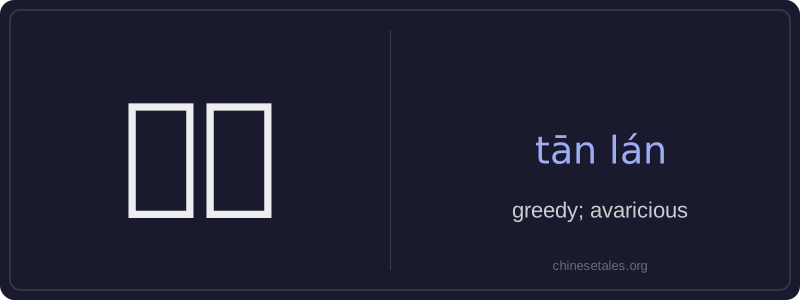
贪婪 (tān lán) is an adjective meaning 'greedy' or 'avaricious'—describing an excessive, insatiable desire for something, especially wealth, power, or possessions. The character 贪 means 'to covet' or 'to be greedy', often implying moral weakness or lack of self-restraint; 婪 intensifies this meaning and historically relates to 'ravenous appetite', originally used in classical texts to describe beasts devouring prey. Together, they form a compound that emphasizes unrestrained, morally questionable craving.
This word carries strong negative connotations and is commonly used in formal writing, news reports, literature, and moral discourse—not in casual speech about minor wants (e.g., wanting dessert). It frequently appears in contexts involving corruption, exploitation, environmental destruction, or psychological critique. While it can modify nouns (e.g., 贪婪的欲望), it’s also used predicatively (e.g., 他很贪婪). Unlike milder terms like 想要 ('to want'), 贪婪 always implies excess and ethical failure.
Example Sentences
Related Words
国语
‘Guó yǔ’ literally means 'national language'—
无论谁
‘无论谁’ (wú lùn shéi) is a pronoun meaning
外语
‘外语’ literally means ‘outside language’ —
不对
不对 (bù duì) literally combines 不 (bù), meani
我的
我的 (wǒ de) is a possessive pronoun meaning 'my'
违规
违规 (wéi guī) literally means 'to violate rules
亲笔
‘亲笔’ literally means ‘one’s own hand’—comb
面条
‘面条’ (miàn tiáo) literally means ‘flour str