Word Explanation
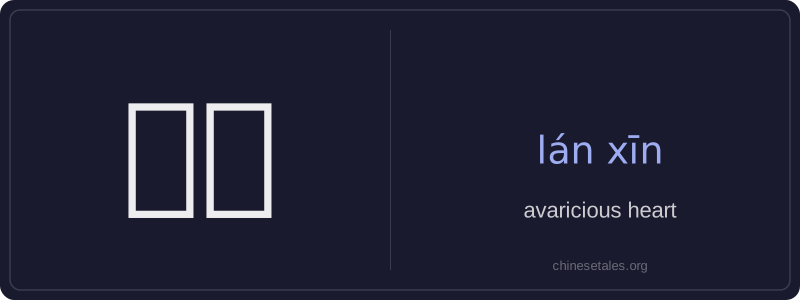
‘婪心’ literally means 'greedy heart'—a compound noun formed by 婪 (lán), meaning 'greedy' or 'covetous', and 心 (xīn), meaning 'heart' or 'mind'. It is a literary, somewhat classical expression that personifies greed as an inner force or disposition. Unlike the more common adjective 贪婪 (tānlán), 婪心 functions exclusively as a noun and carries a strong moral or critical connotation, often implying insatiable desire—especially for wealth, power, or material gain.
The term appears frequently in moralistic writing, historical narratives, and idiomatic expressions to describe corrupt officials, unscrupulous merchants, or characters driven by unchecked ambition. It evokes imagery of moral decay and is rarely used in casual speech; instead, it appears in formal essays, news commentary, or literary criticism to underscore ethical failure at the psychological level.
Example Sentences
Related Words
国语
‘Guó yǔ’ literally means 'national language'—
无论谁
‘无论谁’ (wú lùn shéi) is a pronoun meaning
外语
‘外语’ literally means ‘outside language’ —
不对
不对 (bù duì) literally combines 不 (bù), meani
我的
我的 (wǒ de) is a possessive pronoun meaning 'my'
违规
违规 (wéi guī) literally means 'to violate rules
亲笔
‘亲笔’ literally means ‘one’s own hand’—comb
面条
‘面条’ (miàn tiáo) literally means ‘flour str