Word Explanation
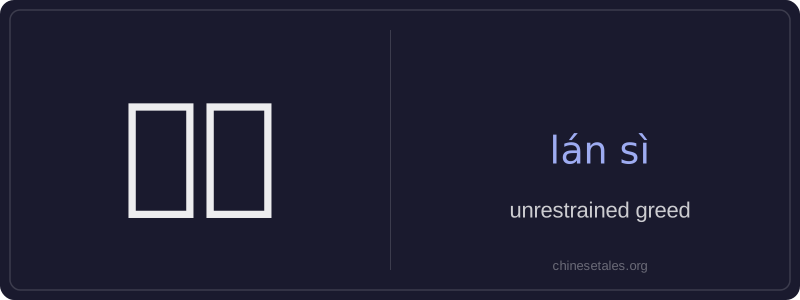
‘婪肆’ is a literary, formal noun meaning 'unrestrained greed'—a deep, unchecked craving that oversteps moral or social boundaries. The first character 婪 (lán) means 'greedy' or 'covetous', often implying insatiable desire, especially for wealth or power; it appears in words like 奢婪 (shēlán, 'extravagant greed'). The second character 肆 (sì) means 'uninhibited', 'reckless', or 'unbridled', suggesting lack of restraint or disregard for limits. Together, 婪肆 emphasizes not just greed but its unrestrained, almost violent expression.
This term is rarely used in casual speech—it appears mainly in classical texts, formal essays, political commentary, or literary criticism to condemn corruption, exploitation, or moral decay. It carries strong negative connotation and often implies systemic or habitual excess rather than momentary temptation. Because of its weight and formality, it’s typically modified by adjectives like 极端 (jíduān, 'extreme') or paired with verbs like 表现 (biǎoxiàn, 'to manifest') or 滋长 (zīzhǎng, 'to grow') rather than used predicatively.
Example Sentences
Related Words
国语
‘Guó yǔ’ literally means 'national language'—
无论谁
‘无论谁’ (wú lùn shéi) is a pronoun meaning
外语
‘外语’ literally means ‘outside language’ —
不对
不对 (bù duì) literally combines 不 (bù), meani
我的
我的 (wǒ de) is a possessive pronoun meaning 'my'
违规
违规 (wéi guī) literally means 'to violate rules
亲笔
‘亲笔’ literally means ‘one’s own hand’—comb
面条
‘面条’ (miàn tiáo) literally means ‘flour str