Word Explanation
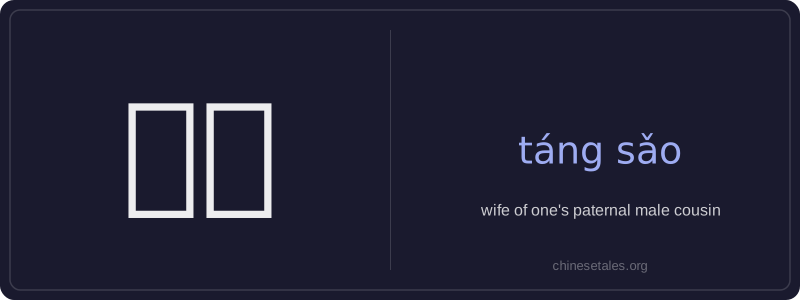
‘Táng sǎo’ refers specifically to the wife of one’s paternal male cousin — that is, the spouse of a cousin who shares the same paternal grandfather as you. The character ‘堂’ (táng) denotes relatives connected through the father’s side and implies shared ancestry within the same lineage or branch of the family; ‘嫂’ (sǎo) means ‘elder brother’s wife’ and carries connotations of respect and seniority in kinship terms. Together, ‘táng sǎo’ combines these ideas to indicate a formal, respectful familial title used in traditional Chinese kinship terminology.
This term reflects the importance of distinguishing paternal versus maternal relatives and hierarchical relationships in Chinese family structure. It is commonly used in spoken and written contexts when referring to or addressing this relative directly — especially in formal family gatherings, wedding introductions, or genealogical discussions. Unlike more general terms like ‘aunt’ or ‘cousin’s wife’ in English, ‘táng sǎo’ is precise and culturally embedded, requiring awareness of both lineage and marital status.
Example Sentences
Related Words
国语
‘Guó yǔ’ literally means 'national language'—
无论谁
‘无论谁’ (wú lùn shéi) is a pronoun meaning
外语
‘外语’ literally means ‘outside language’ —
不对
不对 (bù duì) literally combines 不 (bù), meani
我的
我的 (wǒ de) is a possessive pronoun meaning 'my'
违规
违规 (wéi guī) literally means 'to violate rules
亲笔
‘亲笔’ literally means ‘one’s own hand’—comb
面条
‘面条’ (miàn tiáo) literally means ‘flour str