Word Explanation
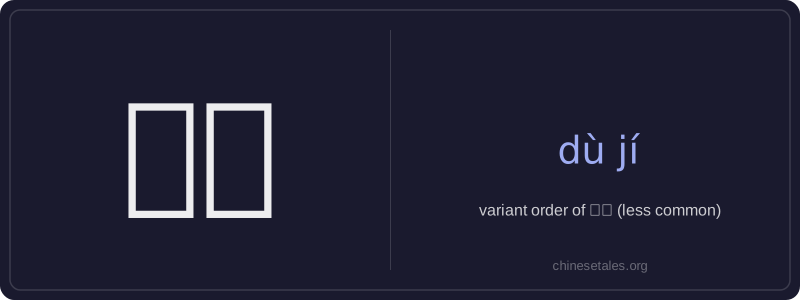
妒嫉 is a noun meaning 'envy' or 'jealousy', and it is a less common, reversed variant of the standard term 嫉妒 (jí dù). Both characters individually carry strong negative emotional connotations: 妒 (dù) emphasizes resentment toward others’ advantages, especially in love or status, while 嫉 (jí) stresses intolerance of others’ success or superiority. Together, 妒嫉 functions as a compound noun expressing intense, often irrational, resentment rooted in perceived unfairness or personal inadequacy.
This term appears more frequently in literary, classical, or emphatic contexts than in everyday speech — modern spoken Chinese strongly prefers 嫉妒. It may appear in formal writing, historical narratives, or psychological discussions to underscore the destructive or morally fraught nature of the emotion. Unlike neutral terms like 羡慕 (xiànmù, 'admiration'), 妒嫉 implies malice, ill will, or a desire to undermine the envied person.
Example Sentences
Related Words
国语
‘Guó yǔ’ literally means 'national language'—
无论谁
‘无论谁’ (wú lùn shéi) is a pronoun meaning
外语
‘外语’ literally means ‘outside language’ —
我的
我的 (wǒ de) is a possessive pronoun meaning 'my'
不对
不对 (bù duì) literally combines 不 (bù), meani
违规
违规 (wéi guī) literally means 'to violate rules
亲笔
‘亲笔’ literally means ‘one’s own hand’—comb
面条
‘面条’ (miàn tiáo) literally means ‘flour str