Word Explanation
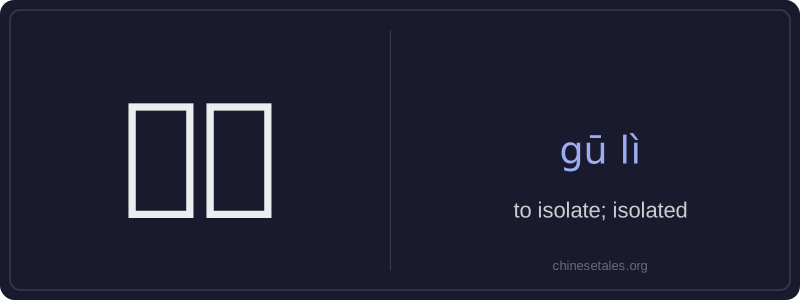
'孤立' (gū lì) literally combines '孤' (gū), meaning 'alone' or 'orphaned', and '立' (lì), meaning 'to stand'. Together, they convey the idea of standing alone—physically, socially, or emotionally—without support or connection. It emphasizes separation from others, often with a negative connotation of abandonment, exclusion, or helplessness.
This word is commonly used in both concrete and abstract contexts: it can describe a person cut off from friends or society, a country diplomatically shunned, or even an idea rejected by mainstream thought. As a verb, it often appears with '被' (bèi) to indicate passive isolation ('被孤立' — 'to be isolated'). As an adjective, it modifies nouns like '状态' (state) or '处境' (situation). While related to physical solitude, 孤立 carries stronger emotional or systemic weight than simpler terms like '独自' (dúzì).
Example Sentences
Related Words
国语
‘Guó yǔ’ literally means 'national language'—
无论谁
‘无论谁’ (wú lùn shéi) is a pronoun meaning
外语
‘外语’ literally means ‘outside language’ —
我的
我的 (wǒ de) is a possessive pronoun meaning 'my'
不对
不对 (bù duì) literally combines 不 (bù), meani
违规
违规 (wéi guī) literally means 'to violate rules
亲笔
‘亲笔’ literally means ‘one’s own hand’—comb
面条
‘面条’ (miàn tiáo) literally means ‘flour str