Word Explanation
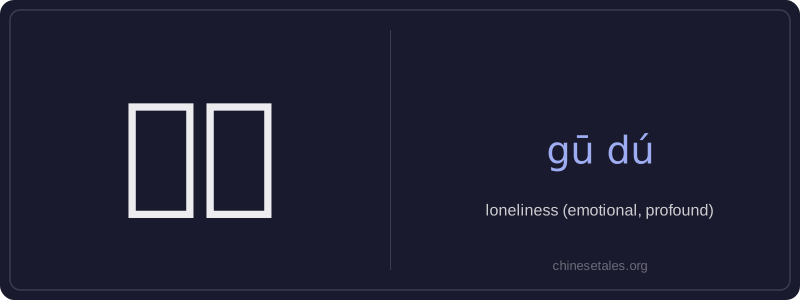
孤独 (gū dú) expresses a deep, often introspective sense of loneliness — not just physical isolation, but an emotional state of being disconnected or misunderstood, even among others. The character 孤 means 'orphaned' or 'alone' (historically implying vulnerability or lack of support), while 独 means 'sole', 'only', or 'independent'. Together, they intensify the feeling: not merely being by oneself, but experiencing inner solitude that feels enduring and profound.
This word is commonly used in literary, reflective, or psychological contexts — describing feelings in poetry, therapy discussions, or personal narratives. It carries a slightly solemn or mature tone, rarely used casually among friends (unlike simpler terms like '一个人'). 孤独 can function as both a noun ('a deep loneliness') and an adjective ('a lonely person'), though as an adjective it usually modifies abstract nouns (e.g., 孤独感 'feeling of loneliness') or appears after 是 or 很.
Example Sentences
Related Words
国语
‘Guó yǔ’ literally means 'national language'—
无论谁
‘无论谁’ (wú lùn shéi) is a pronoun meaning
外语
‘外语’ literally means ‘outside language’ —
我的
我的 (wǒ de) is a possessive pronoun meaning 'my'
不对
不对 (bù duì) literally combines 不 (bù), meani
违规
违规 (wéi guī) literally means 'to violate rules
亲笔
‘亲笔’ literally means ‘one’s own hand’—comb
面条
‘面条’ (miàn tiáo) literally means ‘flour str