Word Explanation
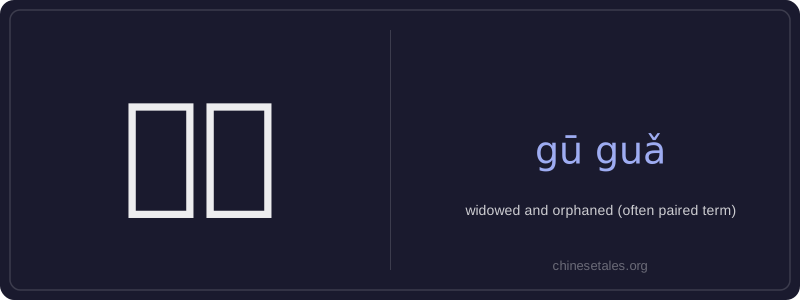
孤寡 (gū guǎ) is a fixed, classical compound noun meaning 'widowed and orphaned'—referring to people who have lost both spouse and children, or more broadly, those who are socially isolated due to the absence of immediate family. The character 孤 (gū) means 'orphaned' or 'alone', often implying loss of parents; 寡 (guǎ) means 'widowed', especially a woman whose husband has died. Together, they form a solemn, literary term emphasizing profound familial loss and vulnerability.
This term appears most frequently in formal, compassionate, or administrative contexts—such as government welfare programs, charitable reports, or news about elderly care. It carries strong connotations of social marginalization and need for support. While historically gendered (寡 traditionally referred only to widows), modern usage is increasingly gender-neutral when describing elderly individuals living alone without dependents or caregivers.
Example Sentences
Related Words
国语
‘Guó yǔ’ literally means 'national language'—
无论谁
‘无论谁’ (wú lùn shéi) is a pronoun meaning
外语
‘外语’ literally means ‘outside language’ —
我的
我的 (wǒ de) is a possessive pronoun meaning 'my'
不对
不对 (bù duì) literally combines 不 (bù), meani
违规
违规 (wéi guī) literally means 'to violate rules
亲笔
‘亲笔’ literally means ‘one’s own hand’—comb
面条
‘面条’ (miàn tiáo) literally means ‘flour str