Word Explanation
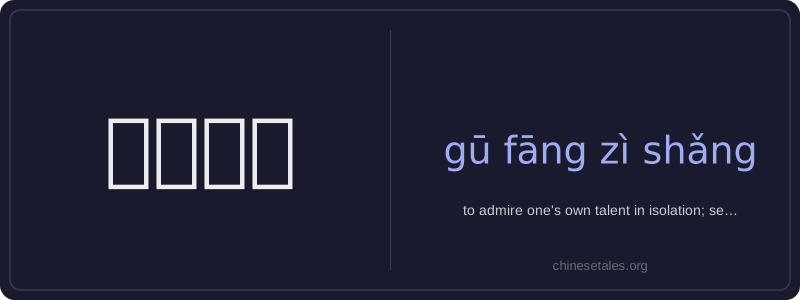
‘孤芳自赏’ literally means ‘a solitary flower admiring itself’ — a vivid metaphor rooted in classical Chinese poetry. The character 孤 (gū) conveys isolation or singularity; 芳 (fāng) refers to fragrance or, figuratively, outstanding talent or virtue; 自 (zì) means ‘self’; and 赏 (shǎng) means ‘to appreciate’ or ‘to admire’. Together, the idiom describes someone who values their own abilities or qualities so highly that they withdraw from others, often with a sense of superiority or melancholy detachment.
It carries a slightly negative or self-deprecating tone, implying lack of humility, social awareness, or openness to feedback. While it can describe genuine artistic introspection, it more commonly critiques aloofness or intellectual pride. It’s frequently used in literary, academic, or reflective contexts — for example, describing a writer who publishes without seeking readers’ input, or an artist who refuses collaboration.
Example Sentences
Related Words
国语
‘Guó yǔ’ literally means 'national language'—
无论谁
‘无论谁’ (wú lùn shéi) is a pronoun meaning
外语
‘外语’ literally means ‘outside language’ —
我的
我的 (wǒ de) is a possessive pronoun meaning 'my'
不对
不对 (bù duì) literally combines 不 (bù), meani
违规
违规 (wéi guī) literally means 'to violate rules
亲笔
‘亲笔’ literally means ‘one’s own hand’—comb
面条
‘面条’ (miàn tiáo) literally means ‘flour str