Word Explanation
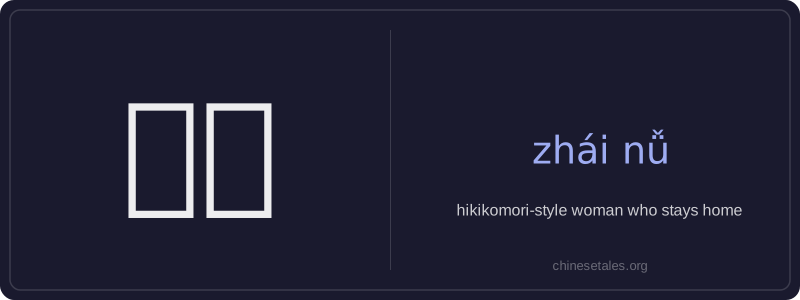
'Zhái nǚ' literally combines 'zhái' (meaning 'home', 'residence', or 'to stay indoors') and 'nǚ' (meaning 'woman'). It refers to a young woman who voluntarily withdraws from social life and spends most of her time at home—often engaging in hobbies like online gaming, watching dramas, reading manga, or browsing the internet. While it shares roots with the Japanese term 'hikikomori', 'zhái nǚ' is not necessarily clinical; it often carries a light, self-deprecating, or humorous tone in casual Chinese speech.
The term reflects contemporary urban youth culture in China, where digital connectivity enables extended indoor lifestyles. It’s commonly used among peers—not as a formal diagnosis but as an identity marker or lifestyle label. Unlike medical terms for social withdrawal, 'zhái nǚ' emphasizes choice, comfort, and autonomy rather than pathology, though overuse may hint at underlying stress or avoidance.
Example Sentences
Related Words
国语
‘Guó yǔ’ literally means 'national language'—
无论谁
‘无论谁’ (wú lùn shéi) is a pronoun meaning
外语
‘外语’ literally means ‘outside language’ —
我的
我的 (wǒ de) is a possessive pronoun meaning 'my'
不对
不对 (bù duì) literally combines 不 (bù), meani
违规
违规 (wéi guī) literally means 'to violate rules
亲笔
‘亲笔’ literally means ‘one’s own hand’—comb
面条
‘面条’ (miàn tiáo) literally means ‘flour str