Word Explanation
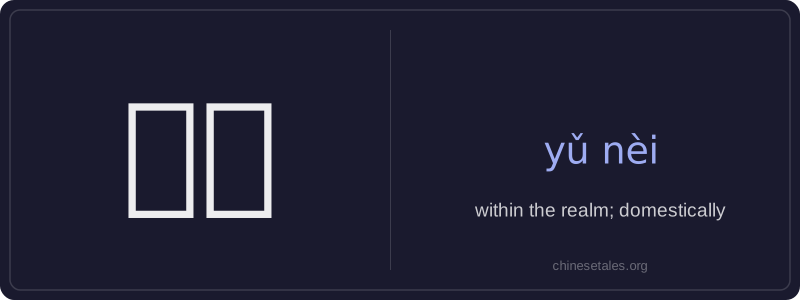
宇内 literally means 'within the universe'—'宇' (yǔ) refers to space, the cosmos, or the physical realm, while '内' (nèi) means 'inside' or 'within'. Historically, it was used in classical Chinese to denote the entire known world under Heaven (tianxia), especially the territory governed by the Chinese emperor. Over time, its meaning narrowed to refer more specifically to 'domestic territory' or 'within the country', often with a formal, literary, or rhetorical tone.
In modern usage, 宇内 appears mainly in written contexts—such as official documents, news reports, academic writing, or solemn speeches—to evoke tradition and breadth. It is not used in casual speech or everyday conversation. Unlike the neutral term 国内 (guónèi), 宇内 carries historical gravitas and poetic resonance, sometimes implying cultural or civilizational unity rather than just political borders.
Example Sentences
Related Words
国语
‘Guó yǔ’ literally means 'national language'—
无论谁
‘无论谁’ (wú lùn shéi) is a pronoun meaning
外语
‘外语’ literally means ‘outside language’ —
我的
我的 (wǒ de) is a possessive pronoun meaning 'my'
不对
不对 (bù duì) literally combines 不 (bù), meani
违规
违规 (wéi guī) literally means 'to violate rules
亲笔
‘亲笔’ literally means ‘one’s own hand’—comb
面条
‘面条’ (miàn tiáo) literally means ‘flour str