Word Explanation
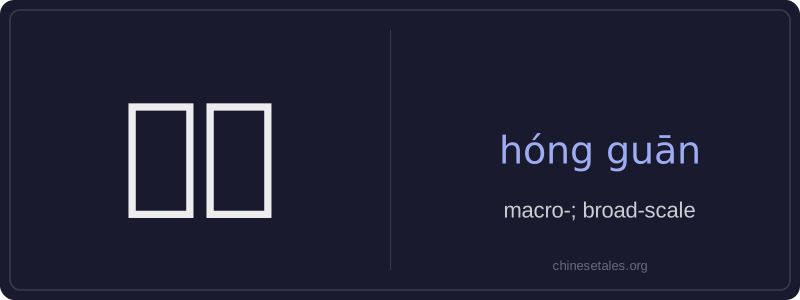
宏观 (hóng guān) literally combines 宏 (hóng), meaning 'grand', 'vast', or 'broad', and 观 (guān), meaning 'view', 'perspective', or 'observation'. Together, they form a compound adjective meaning 'macro-'—referring to large-scale, overarching patterns or systems rather than individual details. It emphasizes a top-down, big-picture approach.
This term is widely used in academic, economic, and policy contexts—such as 宏观经济 (hóng guān jīng jì, 'macroeconomics') or 宏观调控 (hóng guān tiáo kòng, 'macro-level regulation'). While it occasionally appears in scientific or journalistic writing about ecology or society, it is rarely used in casual speech and almost never with concrete, small-scale subjects like animals or daily routines. Its counterpart is 微观 (wēi guān, 'micro-'), which focuses on fine-grained analysis.
Example Sentences
Related Words
国语
‘Guó yǔ’ literally means 'national language'—
无论谁
‘无论谁’ (wú lùn shéi) is a pronoun meaning
外语
‘外语’ literally means ‘outside language’ —
我的
我的 (wǒ de) is a possessive pronoun meaning 'my'
不对
不对 (bù duì) literally combines 不 (bù), meani
违规
违规 (wéi guī) literally means 'to violate rules
亲笔
‘亲笔’ literally means ‘one’s own hand’—comb
面条
‘面条’ (miàn tiáo) literally means ‘flour str