Word Explanation
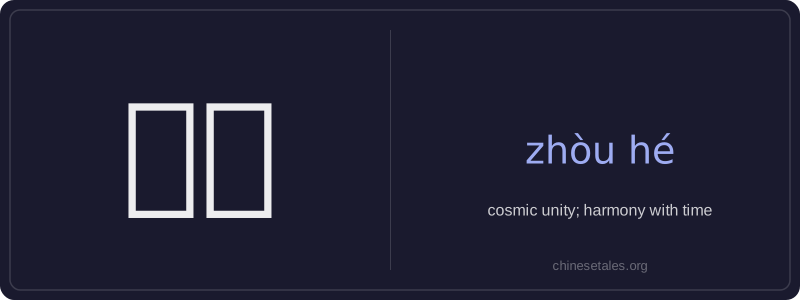
宙合 (zhòu hé) is a classical Chinese compound meaning 'cosmic unity' or 'harmony with time and the universe.' The character 宙 (zhòu) refers to the vertical dimension of time — past, present, and future — often paired with 宇 (yǔ), which denotes space; together they form 宇宙 (yǔzhòu), 'universe.' The character 合 (hé) means 'to unite,' 'to harmonize,' or 'to accord with.' Thus, 宙合 conveys the philosophical ideal of aligning human action, thought, or rhythm with the vast, cyclical flow of cosmic time — not merely chronological time, but time as an organic, moral, and natural force.
This term appears mainly in Daoist, Confucian, and classical literary contexts, especially when describing sage-like conduct, seasonal rituals, or meditative states. It is rarely used in modern spoken Chinese but retains resonance in poetry, calligraphy inscriptions, and philosophical discourse. Unlike everyday words for 'harmony' like 和谐 (héxié), 宙合 carries metaphysical weight and evokes reverence for cosmic order.
Example Sentences
Related Words
国语
‘Guó yǔ’ literally means 'national language'—
无论谁
‘无论谁’ (wú lùn shéi) is a pronoun meaning
外语
‘外语’ literally means ‘outside language’ —
我的
我的 (wǒ de) is a possessive pronoun meaning 'my'
不对
不对 (bù duì) literally combines 不 (bù), meani
违规
违规 (wéi guī) literally means 'to violate rules
亲笔
‘亲笔’ literally means ‘one’s own hand’—comb
面条
‘面条’ (miàn tiáo) literally means ‘flour str