Word Explanation
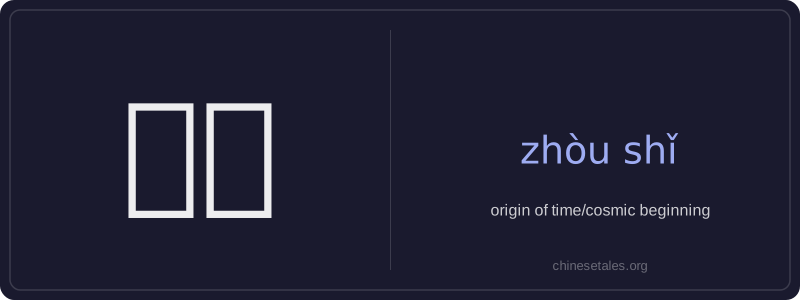
‘宙始’ is a literary and philosophical compound noun meaning ‘the origin of time’ or ‘cosmic beginning’. It combines 宙 (zhòu), an ancient term for ‘time’—especially vast, cosmic time—and 始 (shǐ), meaning ‘beginning’ or ‘origin’. Together, they evoke the primordial moment before time as we know it, often used in classical Chinese cosmology, Daoist or Buddhist texts, and modern poetic or scientific writing about the universe’s birth.
This word is highly formal and rarely appears in everyday speech. It carries profound, abstract connotations—similar to ‘alpha and omega’ in English—but with distinctly East Asian metaphysical resonance. You’ll encounter it most often in academic discussions of cosmogony, historical philosophy, or artistic works reflecting on creation and eternity. Because it’s monosyllabic in structure yet deeply conceptual, learners should treat it as a fixed lexical unit rather than analyzing its parts separately in conversation.
Example Sentences
Related Words
国语
‘Guó yǔ’ literally means 'national language'—
无论谁
‘无论谁’ (wú lùn shéi) is a pronoun meaning
外语
‘外语’ literally means ‘outside language’ —
我的
我的 (wǒ de) is a possessive pronoun meaning 'my'
不对
不对 (bù duì) literally combines 不 (bù), meani
违规
违规 (wéi guī) literally means 'to violate rules
亲笔
‘亲笔’ literally means ‘one’s own hand’—comb
面条
‘面条’ (miàn tiáo) literally means ‘flour str