Word Explanation
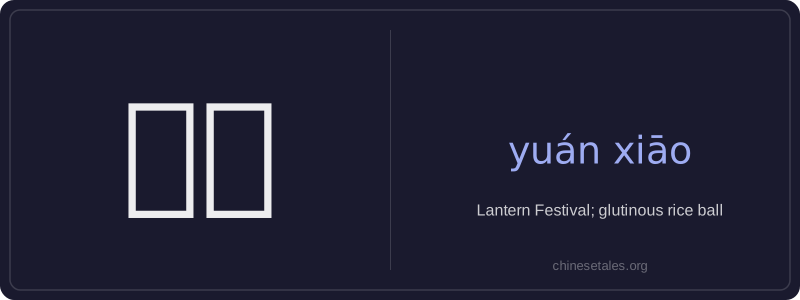
‘元宵’ (yuán xiāo) is a compound noun with dual meanings: first, it refers to the Lantern Festival—the 15th day of the first lunar month, marking the end of Chinese New Year celebrations; second, it names the sweet, round glutinous rice balls traditionally eaten during this festival. The character 元 (yuán) means 'first' or 'beginning', and 宵 (xiāo) means 'night'—together, they literally mean 'the first night' (of the lunar year’s full moon), reflecting the festival’s timing at the first full moon of the new year.
In daily usage, ‘元宵’ most commonly appears in cultural or seasonal contexts—discussing festivals, traditional foods, or family customs. While both meanings share the same pronunciation and characters, context usually makes the intended sense clear: when paired with words like ‘节’ (jié, 'festival') or ‘灯会’ (dēnghuì, 'lantern fair'), it refers to the event; when mentioned with ‘吃’ (chī, 'eat') or ‘汤圆’ (tāngyuán), it points to the food—though note that in southern China, the food is more often called ‘汤圆’, while ‘元宵’ typically refers to the northern-style version made by rolling dry rice flour over fillings.
Example Sentences
Related Words
国语
‘Guó yǔ’ literally means 'national language'—
无论谁
‘无论谁’ (wú lùn shéi) is a pronoun meaning
外语
‘外语’ literally means ‘outside language’ —
我的
我的 (wǒ de) is a possessive pronoun meaning 'my'
不对
不对 (bù duì) literally combines 不 (bù), meani
违规
违规 (wéi guī) literally means 'to violate rules
亲笔
‘亲笔’ literally means ‘one’s own hand’—comb
面条
‘面条’ (miàn tiáo) literally means ‘flour str