Word Explanation
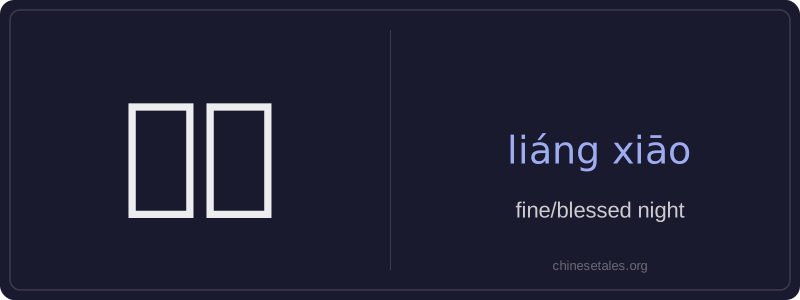
‘良宵’ literally combines ‘良’ (liáng), meaning ‘good,’ ‘fine,’ or ‘blessed,’ and ‘宵’ (xiāo), meaning ‘night’ or ‘evening.’ Together, it evokes a night of exceptional beauty, peace, or significance—often imbued with poetic or emotional resonance. It’s not used for ordinary nights but for those marked by joy, romance, celebration, or quiet profundity, such as weddings, festivals, or heartfelt reunions.
The term appears frequently in classical poetry, song lyrics, and formal speech, carrying a refined, slightly literary tone. While modern spoken Chinese may favor simpler phrases like ‘美好的夜晚’ (měihǎo de yèwǎn), ‘良宵’ endures in ceremonial contexts, wedding toasts, festival greetings, and artistic expression—always suggesting a night worth remembering, elevated beyond the mundane by atmosphere, companionship, or meaning.
Example Sentences
Related Words
国语
‘Guó yǔ’ literally means 'national language'—
无论谁
‘无论谁’ (wú lùn shéi) is a pronoun meaning
外语
‘外语’ literally means ‘outside language’ —
我的
我的 (wǒ de) is a possessive pronoun meaning 'my'
不对
不对 (bù duì) literally combines 不 (bù), meani
违规
违规 (wéi guī) literally means 'to violate rules
亲笔
‘亲笔’ literally means ‘one’s own hand’—comb
面条
‘面条’ (miàn tiáo) literally means ‘flour str