Word Explanation
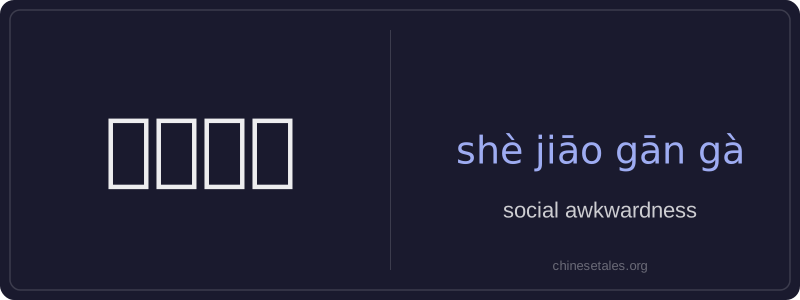
'社交尴尬' (shè jiāo gān gà) literally combines 'social' (社交 shè jiāo) and 'awkwardness' (尴尬 gān gà) to mean the uncomfortable, self-conscious feeling that arises during social interactions — for example, when you forget someone’s name, misinterpret a joke, or say something unintentionally offensive. It reflects a momentary breakdown in social fluency, often accompanied by blushing, hesitation, or silence.
This noun is commonly used in psychological discussions, everyday conversation, and media commentary about interpersonal dynamics. Unlike general embarrassment (尴尬 alone), 社交尴尬 specifically highlights the relational, interactive dimension — it’s not just personal discomfort, but discomfort rooted in how others might perceive you during real-time communication. It’s neutral in tone and widely understood across age groups, though slightly more common in urban, educated speech.
Example Sentences
Related Words
国语
‘Guó yǔ’ literally means 'national language'—
无论谁
‘无论谁’ (wú lùn shéi) is a pronoun meaning
外语
‘外语’ literally means ‘outside language’ —
我的
我的 (wǒ de) is a possessive pronoun meaning 'my'
不对
不对 (bù duì) literally combines 不 (bù), meani
违规
违规 (wéi guī) literally means 'to violate rules
亲笔
‘亲笔’ literally means ‘one’s own hand’—comb
面条
‘面条’ (miàn tiáo) literally means ‘flour str