Word Explanation
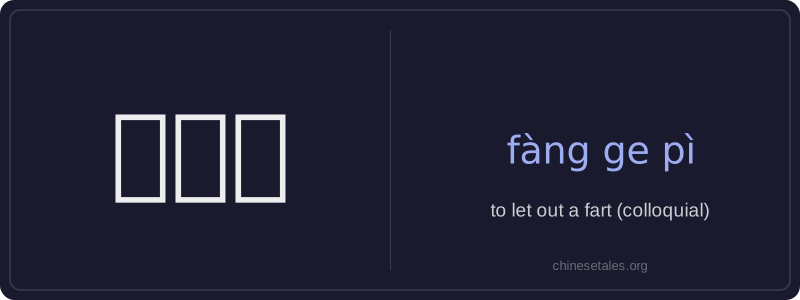
'Fàng ge pì' literally combines 'fàng' (to release or let out), 'ge' (a generic measure word), and 'pì' (fart). It's a colloquial, informal verb phrase meaning 'to let out a fart'. Unlike formal terms like '排气' (qìpái) used in medical contexts, this expression is casual, often humorous or blunt, and common in everyday spoken Chinese among friends or family. It reflects bodily functions openly but carries mild vulgarity — acceptable among intimates, inappropriate in formal or polite settings.
The phrase follows standard verb–object structure: the verb 'fàng' takes 'ge pì' as its object. Though 'pì' alone can function as a noun, adding 'ge' makes it more conversational and natural in speech. Tone and context heavily influence whether it sounds playful, dismissive, or crude — for instance, saying it while laughing diffuses tension, whereas saying it sternly during an argument may be insulting.
Example Sentences
Related Words
国语
‘Guó yǔ’ literally means 'national language'—
无论谁
‘无论谁’ (wú lùn shéi) is a pronoun meaning
外语
‘外语’ literally means ‘outside language’ —
我的
我的 (wǒ de) is a possessive pronoun meaning 'my'
不对
不对 (bù duì) literally combines 不 (bù), meani
违规
违规 (wéi guī) literally means 'to violate rules
亲笔
‘亲笔’ literally means ‘one’s own hand’—comb
面条
‘面条’ (miàn tiáo) literally means ‘flour str