Word Explanation
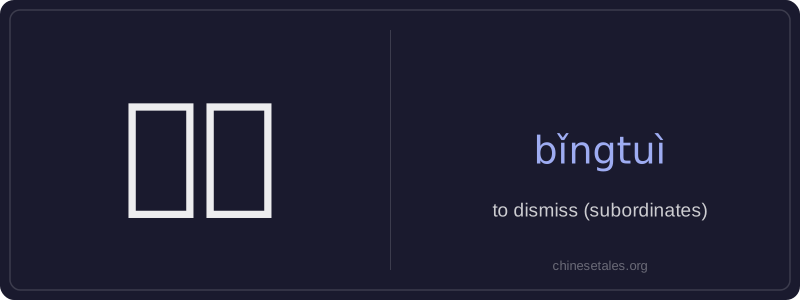
屏退 (bǐngtuì) is a formal, literary verb meaning 'to dismiss (subordinates)'—typically used when a superior orders attendants, guards, or staff to withdraw from a room or presence. The first character 屏 (bǐng) means 'to screen off' or 'to block', suggesting exclusion or removal from proximity; the second character 退 (tuì) means 'to withdraw' or 'to retreat'. Together, they convey the deliberate act of clearing people out, often for privacy, solemnity, or confidentiality. This term appears frequently in historical dramas, classical literature, and formal administrative contexts—not in casual daily speech.
It implies authority and hierarchy: the subject is almost always someone in power (e.g., an emperor, official, or senior executive), and the object is subordinate personnel. While grammatically it can take an object (e.g., 屏退侍从), it’s often used intransitively with context making the dismissed group clear. It carries connotations of dignity, control, and formality—and may subtly suggest distance or aloofness.
Example Sentences
Related Words
国语
‘Guó yǔ’ literally means 'national language'—
无论谁
‘无论谁’ (wú lùn shéi) is a pronoun meaning
外语
‘外语’ literally means ‘outside language’ —
我的
我的 (wǒ de) is a possessive pronoun meaning 'my'
不对
不对 (bù duì) literally combines 不 (bù), meani
违规
违规 (wéi guī) literally means 'to violate rules
亲笔
‘亲笔’ literally means ‘one’s own hand’—comb
面条
‘面条’ (miàn tiáo) literally means ‘flour str