Word Explanation
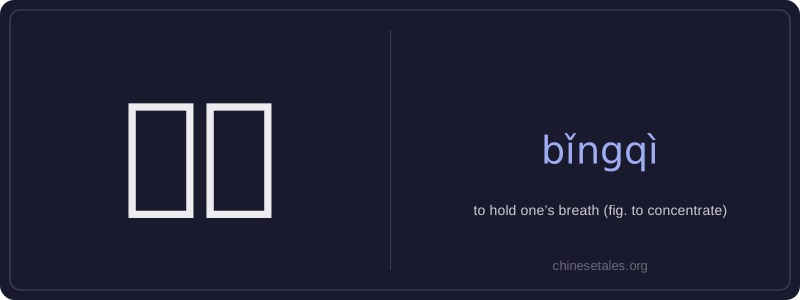
‘屏气’ literally means ‘to block breath’—‘屏’ (bǐng) means ‘to suppress or hold back’, and ‘气’ (qì) means ‘breath’ or ‘air’. Together, they form a verb meaning to consciously stop breathing for a short time, often out of intense focus, suspense, fear, or physical effort. It’s commonly used in both literal and figurative contexts: for example, during medical procedures, underwater swimming, or when waiting anxiously for news.
Unlike the more casual ‘憋气’ (biēqì), which emphasizes discomfort or forced breath-holding, ‘屏气’ carries a connotation of control, intention, and often quiet concentration. It appears frequently in descriptive writing, sports commentary, and health-related instructions—such as yoga or meditation guidance—and is neutral in register, appropriate in both spoken and written Mandarin.
Example Sentences
Related Words
国语
‘Guó yǔ’ literally means 'national language'—
无论谁
‘无论谁’ (wú lùn shéi) is a pronoun meaning
外语
‘外语’ literally means ‘outside language’ —
我的
我的 (wǒ de) is a possessive pronoun meaning 'my'
不对
不对 (bù duì) literally combines 不 (bù), meani
违规
违规 (wéi guī) literally means 'to violate rules
亲笔
‘亲笔’ literally means ‘one’s own hand’—comb
面条
‘面条’ (miàn tiáo) literally means ‘flour str