Word Explanation
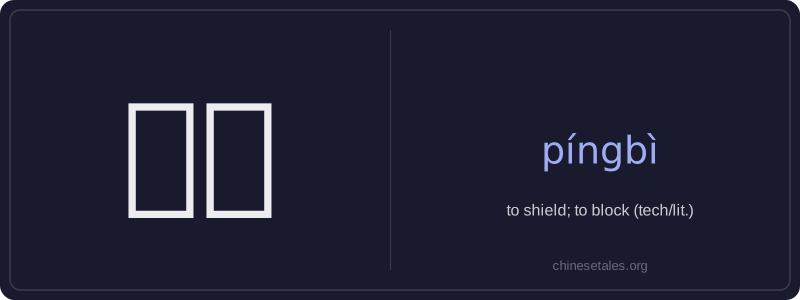
屏蔽 (píngbì) is a verb meaning 'to shield' or 'to block' — literally 'to screen and conceal'. The first character 屏 (píng) means 'screen' or 'barrier', often implying physical or visual obstruction, while 蔽 (bì) means 'to cover', 'to hide', or 'to obscure'. Together, they convey the idea of actively preventing access, visibility, or transmission. Though it appears in literary contexts (e.g., shielding from harm), it’s most common today in technology: blocking websites, filtering messages, muting notifications, or disabling signals.
The word carries a neutral-to-formal register and is rarely used for physical shielding in everyday speech (e.g., you wouldn’t say 屏蔽 the sun — use 遮挡 instead). It implies intentionality and technical or systemic intervention, not passive coverage. In cybersecurity, social media, and network settings, 屏蔽 is standard terminology for user-initiated blocking actions — such as hiding posts from certain accounts or restricting content distribution.
Example Sentences
Related Words
国语
‘Guó yǔ’ literally means 'national language'—
无论谁
‘无论谁’ (wú lùn shéi) is a pronoun meaning
外语
‘外语’ literally means ‘outside language’ —
我的
我的 (wǒ de) is a possessive pronoun meaning 'my'
不对
不对 (bù duì) literally combines 不 (bù), meani
违规
违规 (wéi guī) literally means 'to violate rules
亲笔
‘亲笔’ literally means ‘one’s own hand’—comb
面条
‘面条’ (miàn tiáo) literally means ‘flour str