Word Explanation
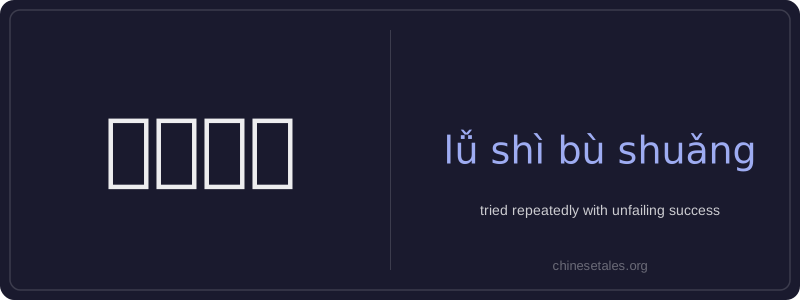
'Lǚ shì bù shuǎng' literally means 'repeatedly tried, never disappointing' — it describes a method, tool, or approach that consistently delivers the expected result without failure. The character 屡 (lǚ) means 'repeatedly'; 试 (shì) means 'to try or test'; 不 (bù) is the negation 'not'; and 爽 (shuǎng) originally meant 'refreshing' but here carries the classical meaning of 'to fail or go astray' (as in 失爽, 'to miss the mark'). Together, the phrase conveys unwavering reliability through repeated use.
This idiom is commonly used in formal or semi-formal contexts — for example, when praising a proven technique, a dependable remedy, or a time-tested strategy. It often appears in written Chinese, news reports, or professional discussions, and carries a slightly literary tone. While it implies success, it does not suggest novelty or innovation; rather, it emphasizes consistency and trustworthiness over time.
Example Sentences
Related Words
国语
‘Guó yǔ’ literally means 'national language'—
无论谁
‘无论谁’ (wú lùn shéi) is a pronoun meaning
外语
‘外语’ literally means ‘outside language’ —
我的
我的 (wǒ de) is a possessive pronoun meaning 'my'
不对
不对 (bù duì) literally combines 不 (bù), meani
违规
违规 (wéi guī) literally means 'to violate rules
亲笔
‘亲笔’ literally means ‘one’s own hand’—comb
面条
‘面条’ (miàn tiáo) literally means ‘flour str