Word Explanation
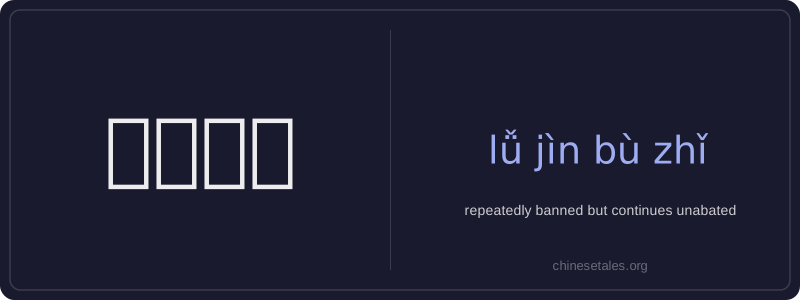
‘屡禁不止’ literally means 'repeatedly banned but does not stop' — it describes a persistent problem that continues despite repeated official attempts to suppress or eliminate it. The four characters combine logically: 屡 (repeatedly), 禁 (to ban/prohibit), 不 (not), and 止 (to stop/cease). Together, they form an idiomatic adjective expressing stubborn recurrence in the face of authority or regulation.
This phrase is commonly used in formal or journalistic contexts — especially when discussing social issues like illegal wildlife trade, counterfeit medicine, unlicensed clinics, or environmental violations. It carries a tone of frustration or criticism toward ineffective enforcement. While grammatically an adjective, it functions predicatively (e.g., ‘问题屡禁不止’) or attributively before nouns (e.g., ‘屡禁不止的现象’), and is rarely used in casual speech.
Example Sentences
Related Words
国语
‘Guó yǔ’ literally means 'national language'—
无论谁
‘无论谁’ (wú lùn shéi) is a pronoun meaning
外语
‘外语’ literally means ‘outside language’ —
我的
我的 (wǒ de) is a possessive pronoun meaning 'my'
不对
不对 (bù duì) literally combines 不 (bù), meani
违规
违规 (wéi guī) literally means 'to violate rules
亲笔
‘亲笔’ literally means ‘one’s own hand’—comb
面条
‘面条’ (miàn tiáo) literally means ‘flour str