Word Explanation
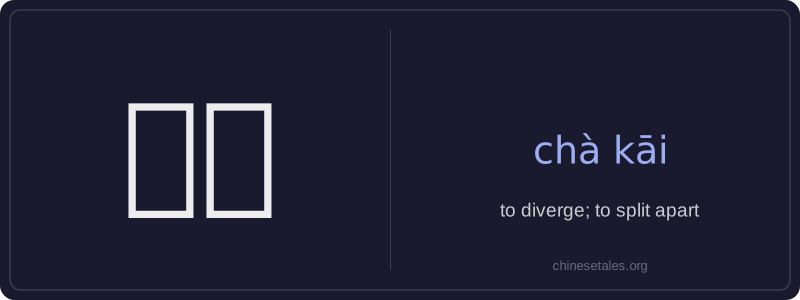
岔开 (chà kāi) is a verb meaning 'to diverge' or 'to split apart,' often describing paths, roads, rivers, or abstract things like opinions or topics. The character 岔 (chà) originally refers to a fork or branch point—such as where a road splits—and 开 (kāi) means 'to open' or 'to separate.' Together, they convey the idea of something physically or conceptually branching off from a common origin. It emphasizes the moment or result of separation rather than the process.
This word is commonly used in geographical or spatial contexts (e.g., roads, trails, rivers), but also appears metaphorically—for instance, when a conversation veers off-topic or when two people’s views begin to differ significantly. It carries a neutral tone and is standard in both spoken and written Mandarin, though more frequent in descriptive or narrative writing than in casual daily speech.
Example Sentences
Related Words
国语
‘Guó yǔ’ literally means 'national language'—
无论谁
‘无论谁’ (wú lùn shéi) is a pronoun meaning
外语
‘外语’ literally means ‘outside language’ —
我的
我的 (wǒ de) is a possessive pronoun meaning 'my'
不对
不对 (bù duì) literally combines 不 (bù), meani
违规
违规 (wéi guī) literally means 'to violate rules
亲笔
‘亲笔’ literally means ‘one’s own hand’—comb
面条
‘面条’ (miàn tiáo) literally means ‘flour str