Word Explanation
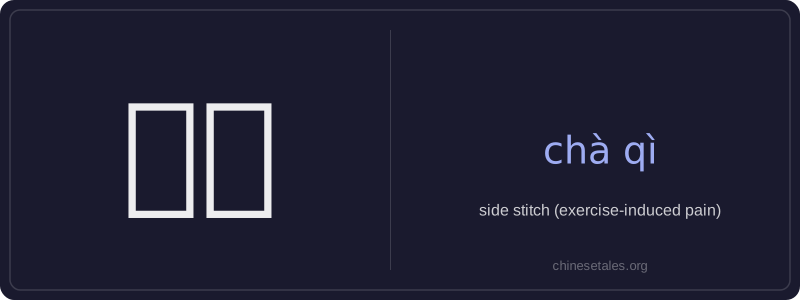
'Chà qì' literally combines 岔 (chà), meaning 'to diverge' or 'branch off', and 气 (qì), meaning 'breath' or 'vital energy'. Together, they describe the sudden, sharp pain in the side—usually under the ribs—caused by spasms of the diaphragm or abdominal muscles during physical exertion. This term is deeply rooted in traditional Chinese understanding of qi flow; the 'divergence' refers to disrupted or uneven movement of qi during exercise, especially when breathing is shallow or uncoordinated with movement.
The term is commonly used in everyday speech among athletes, students during PE class, or anyone experiencing this discomfort while running, swimming, or even laughing hard. Unlike clinical terms like 'exercise-related transient abdominal pain' (ETAP), 岔气 is informal, widely understood, and rarely appears in formal medical documents—but it’s instantly recognizable in casual health conversations across all age groups in Chinese-speaking communities.
Example Sentences
Related Words
国语
‘Guó yǔ’ literally means 'national language'—
无论谁
‘无论谁’ (wú lùn shéi) is a pronoun meaning
外语
‘外语’ literally means ‘outside language’ —
我的
我的 (wǒ de) is a possessive pronoun meaning 'my'
不对
不对 (bù duì) literally combines 不 (bù), meani
违规
违规 (wéi guī) literally means 'to violate rules
亲笔
‘亲笔’ literally means ‘one’s own hand’—comb
面条
‘面条’ (miàn tiáo) literally means ‘flour str