Word Explanation
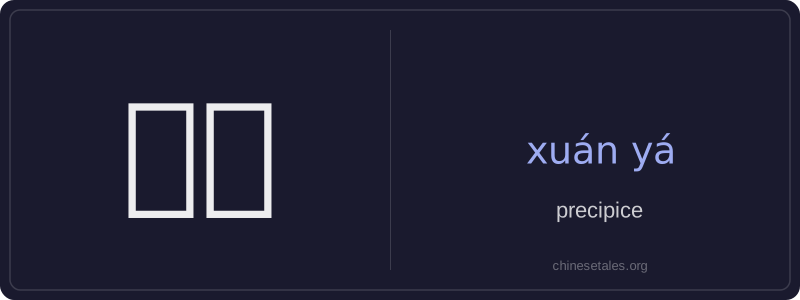
‘悬崖’ (xuán yá) literally combines ‘悬’ (xuán), meaning ‘to hang’ or ‘suspended’, and ‘崖’ (yá), meaning ‘cliff’ or ‘precipice’. Together, they form a noun describing a steep, vertical, or overhanging rock face—often found along coastlines, mountains, or riverbanks. Unlike the more general term ‘山崖’ (mountain cliff), ‘悬崖’ emphasizes dramatic height, exposure, and danger; it evokes imagery of sheer drops with little to no foothold.
This word appears frequently in descriptive writing, travel narratives, geography textbooks, and safety warnings. It’s commonly used in both literal contexts—such as hiking routes or geological features—and figurative expressions like ‘站在悬崖边上’ (to stand on the edge of a precipice), symbolizing a critical, high-stakes moment. While ‘崖’ alone can mean ‘cliff’, ‘悬崖’ is the standard, idiomatic compound for ‘precipice’ in modern Mandarin.
Example Sentences
Related Words
国语
‘Guó yǔ’ literally means 'national language'—
无论谁
‘无论谁’ (wú lùn shéi) is a pronoun meaning
外语
‘外语’ literally means ‘outside language’ —
我的
我的 (wǒ de) is a possessive pronoun meaning 'my'
不对
不对 (bù duì) literally combines 不 (bù), meani
违规
违规 (wéi guī) literally means 'to violate rules
亲笔
‘亲笔’ literally means ‘one’s own hand’—comb
面条
‘面条’ (miàn tiáo) literally means ‘flour str