Word Explanation
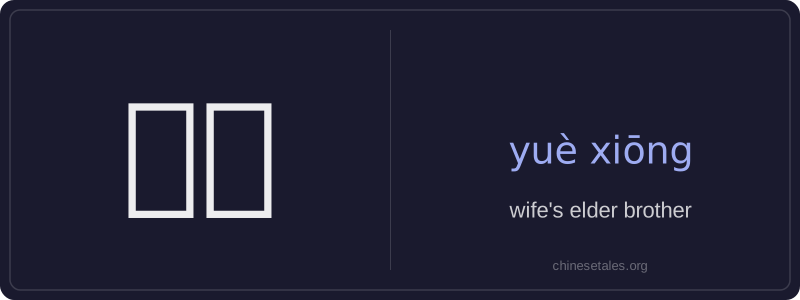
'Yuè xiōng' literally combines 岳 (yuè), meaning 'father-in-law' or 'maternal uncle by marriage', and 兄 (xiōng), meaning 'elder brother'. Together, it specifically refers to one's wife's elder brother — a formal kinship term used in traditional Chinese family relationships. It reflects the importance of marital alliances and hierarchical respect within extended families.
This term is commonly used in spoken and written Chinese when addressing or referring to this relative, especially in formal settings, wedding contexts, or when showing respect. Unlike casual terms like 'gege', 岳兄 carries a respectful, slightly formal tone and is rarely used in very informal speech among close family members. It is gender-specific: only used by a man speaking about his wife’s older brother; women do not use it for their husband’s brothers (those are called '小叔子' or '大伯子').
Example Sentences
Related Words
国语
‘Guó yǔ’ literally means 'national language'—
无论谁
‘无论谁’ (wú lùn shéi) is a pronoun meaning
外语
‘外语’ literally means ‘outside language’ —
我的
我的 (wǒ de) is a possessive pronoun meaning 'my'
不对
不对 (bù duì) literally combines 不 (bù), meani
违规
违规 (wéi guī) literally means 'to violate rules
亲笔
‘亲笔’ literally means ‘one’s own hand’—comb
面条
‘面条’ (miàn tiáo) literally means ‘flour str