Word Explanation
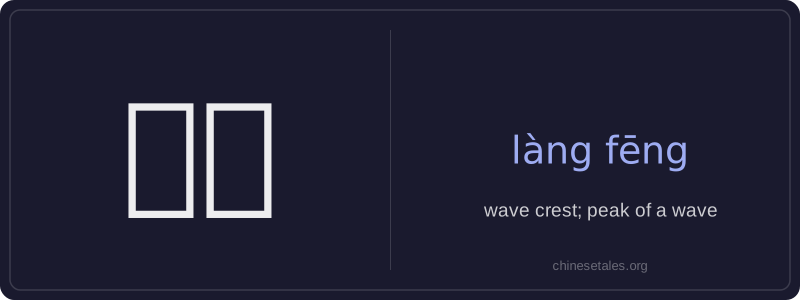
浪峰 (làng fēng) literally combines 浪 (làng), meaning 'wave', and 峰 (fēng), meaning 'peak' or 'summit'. Together, it refers to the highest point of a wave—the crest—where water rises most dramatically before breaking. It is a precise technical and descriptive term used in oceanography, coastal engineering, and marine meteorology, but also appears in literary and scenic descriptions of oceans, rivers, or stormy seas.
In everyday usage, 浪峰 is more formal and scientific than casual alternatives like 浪头 (làng tóu, 'wave head') or simply 浪 (làng). It emphasizes the geometric peak rather than the whole wave body, often appearing in contexts involving wave height measurement, surf forecasting, or poetic imagery of nature’s power and rhythm. While not common in daily conversation, it frequently appears in weather reports, geography textbooks, and travel writing about coastal landscapes.
Example Sentences
Related Words
国语
‘Guó yǔ’ literally means 'national language'—
无论谁
‘无论谁’ (wú lùn shéi) is a pronoun meaning
外语
‘外语’ literally means ‘outside language’ —
我的
我的 (wǒ de) is a possessive pronoun meaning 'my'
不对
不对 (bù duì) literally combines 不 (bù), meani
违规
违规 (wéi guī) literally means 'to violate rules
亲笔
‘亲笔’ literally means ‘one’s own hand’—comb
面条
‘面条’ (miàn tiáo) literally means ‘flour str