Word Explanation
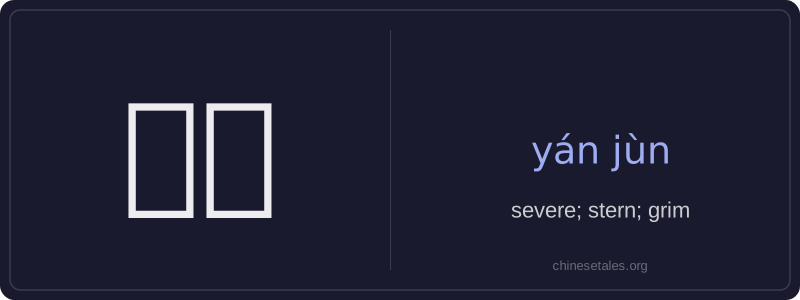
严峻 (yán jùn) is an adjective meaning 'severe,' 'stern,' or 'grim,' often describing serious, challenging, or threatening situations — especially those involving risk, difficulty, or urgency. The first character 严 means 'strict' or 'rigorous,' and the second 峻 means 'steep' or 'precipitous,' evoking a sense of imposing, unyielding harshness. Together, they intensify each other to convey gravity beyond ordinary seriousness — not just difficult, but dauntingly so.
This word is commonly used in formal or written contexts: news reports about public health crises, economic downturns, environmental threats, or political challenges. It rarely describes people’s personalities directly (unlike 严厉 for 'strict person'); instead, it modifies abstract nouns like 形势 (situation), 挑战 (challenge), or 现实 (reality). While it can occasionally appear in spoken language, it carries a sober, weighty tone — never casual or light.
Example Sentences
Related Words
国语
‘Guó yǔ’ literally means 'national language'—
无论谁
‘无论谁’ (wú lùn shéi) is a pronoun meaning
外语
‘外语’ literally means ‘outside language’ —
我的
我的 (wǒ de) is a possessive pronoun meaning 'my'
不对
不对 (bù duì) literally combines 不 (bù), meani
违规
违规 (wéi guī) literally means 'to violate rules
亲笔
‘亲笔’ literally means ‘one’s own hand’—comb
面条
‘面条’ (miàn tiáo) literally means ‘flour str