Word Explanation
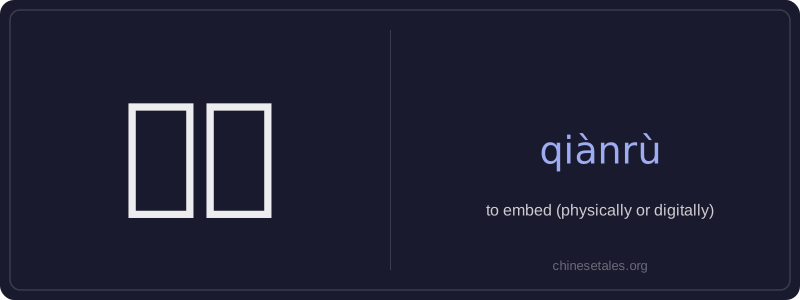
‘嵌入’ (qiànrù) is a verb meaning 'to embed' — to insert or fix something firmly into another object or system, either physically (e.g., a chip into a circuit board) or digitally (e.g., code into software). The first character 嵌 (qiàn) means 'to inset' or 'to fit tightly', often implying precision and permanence; the second character 入 (rù) means 'to enter' or 'to go into'. Together, they convey the idea of something being intentionally and securely placed *within* a larger structure. It’s commonly used in engineering, computing, design, and manufacturing contexts.
Unlike general verbs like 放 (fàng, 'to put') or 插 (chā, 'to insert'), 嵌入 emphasizes integration — the embedded element becomes functionally or structurally part of the host. It’s neutral in register and appears frequently in technical documentation, UI descriptions, and hardware/software specifications. While it can occasionally appear in literary metaphors (e.g., 'a memory embedded in childhood'), its dominant usage remains concrete and technical.
Example Sentences
Related Words
国语
‘Guó yǔ’ literally means 'national language'—
无论谁
‘无论谁’ (wú lùn shéi) is a pronoun meaning
外语
‘外语’ literally means ‘outside language’ —
我的
我的 (wǒ de) is a possessive pronoun meaning 'my'
不对
不对 (bù duì) literally combines 不 (bù), meani
违规
违规 (wéi guī) literally means 'to violate rules
亲笔
‘亲笔’ literally means ‘one’s own hand’—comb
面条
‘面条’ (miàn tiáo) literally means ‘flour str