Word Explanation
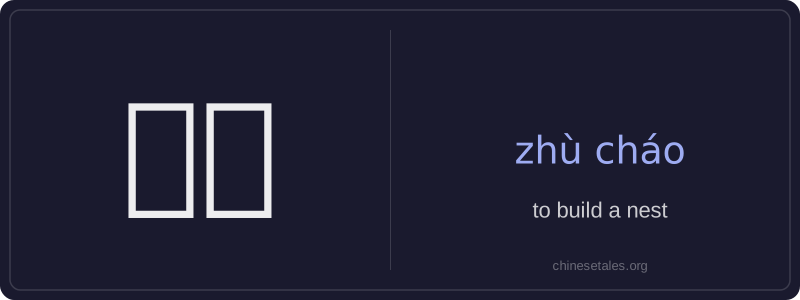
‘筑巢’ literally means ‘to build a nest’ and is formed by combining 筑 (zhù), meaning ‘to construct’ or ‘to build’, and 巢 (cháo), meaning ‘nest’. It describes the instinctive or deliberate act of creating a sheltered space—typically by birds, but also used metaphorically for animals like beavers or even humans in literary or poetic contexts. The term emphasizes purposeful construction, often for breeding, protection, or raising young.
In everyday usage, ‘筑巢’ appears most frequently in biology, nature documentaries, ecology discussions, and Chinese poetry or idioms (e.g., ‘鸠占鹊巢’). While it can occasionally be used figuratively—such as describing people settling down and establishing a home—it remains strongly associated with animal behavior and natural processes rather than human domestic activities like ‘moving in’ or ‘furnishing an apartment’.
Example Sentences
Related Words
国语
‘Guó yǔ’ literally means 'national language'—
无论谁
‘无论谁’ (wú lùn shéi) is a pronoun meaning
不对
不对 (bù duì) literally combines 不 (bù), meani
外语
‘外语’ literally means ‘outside language’ —
我的
我的 (wǒ de) is a possessive pronoun meaning 'my'
违规
违规 (wéi guī) literally means 'to violate rules
亲笔
‘亲笔’ literally means ‘one’s own hand’—comb
面条
‘面条’ (miàn tiáo) literally means ‘flour str