Word Explanation
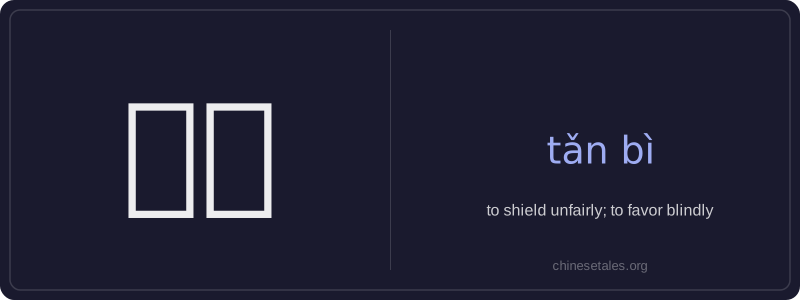
袒庇 (tǎn bì) is a formal, somewhat literary verb meaning to shield or protect someone unfairly—usually out of personal bias, favoritism, or emotional attachment rather than justice or principle. The first character 袒 (tǎn) means 'to expose' or 'to show partiality', historically linked to the gesture of baring one’s chest to signal openness or loyalty—but in this compound, it conveys open-sidedness toward a specific person. The second character 庇 (bì) means 'to shelter' or 'to protect', often with connotations of offering refuge from criticism or consequences.
This word carries strong negative judgment and appears frequently in official reports, news commentary, or moral critiques—for example, when authorities ignore wrongdoing by insiders, or when parents excuse their child’s misconduct without accountability. It implies an abuse of power or influence and suggests a breach of impartiality. While grammatically it functions as a transitive verb (e.g., 袒庇某人), it’s rarely used in casual speech and almost never in positive contexts.
Example Sentences
Related Words
国语
‘Guó yǔ’ literally means 'national language'—
无论谁
‘无论谁’ (wú lùn shéi) is a pronoun meaning
不对
不对 (bù duì) literally combines 不 (bù), meani
外语
‘外语’ literally means ‘outside language’ —
我的
我的 (wǒ de) is a possessive pronoun meaning 'my'
违规
违规 (wéi guī) literally means 'to violate rules
亲笔
‘亲笔’ literally means ‘one’s own hand’—comb
面条
‘面条’ (miàn tiáo) literally means ‘flour str