Word Explanation
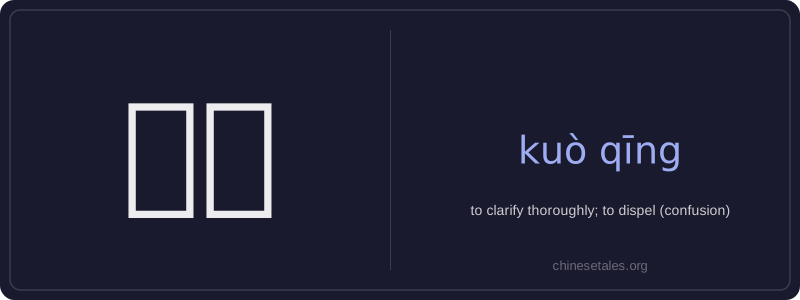
廓清 literally combines 廓 (kuò), meaning 'to expand' or 'to outline', and 清 (qīng), meaning 'clear' or 'pure'. Together, they convey the idea of thoroughly clearing away obstructions — like sweeping aside fog, dust, or confusion — to reveal clarity and truth. It emphasizes completeness and thoroughness, not just partial clarification.
This word is commonly used in formal or written contexts: academic writing, news reports, political discourse, or self-reflection. It often appears when describing efforts to eliminate misunderstandings, dispel rumors, resolve ideological confusion, or untangle complex problems. While it can refer to physical clearing (e.g., smoke or mist), its dominant usage is metaphorical — focusing on mental, conceptual, or social clarity. It carries a slightly elevated, serious tone and is rarely used in casual speech.
Example Sentences
Related Words
国语
‘Guó yǔ’ literally means 'national language'—
无论谁
‘无论谁’ (wú lùn shéi) is a pronoun meaning
不对
不对 (bù duì) literally combines 不 (bù), meani
外语
‘外语’ literally means ‘outside language’ —
我的
我的 (wǒ de) is a possessive pronoun meaning 'my'
违规
违规 (wéi guī) literally means 'to violate rules
亲笔
‘亲笔’ literally means ‘one’s own hand’—comb
面条
‘面条’ (miàn tiáo) literally means ‘flour str