Word Explanation
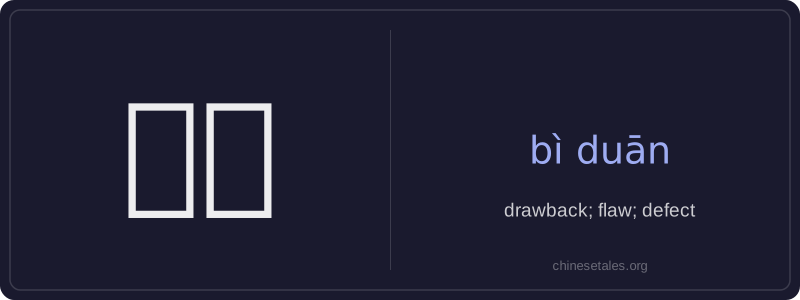
弊端 (bì duān) is a formal noun meaning 'drawback', 'flaw', or 'defect'—especially one embedded in a system, policy, process, or practice. The character 弊 originally meant 'deception' or 'malpractice' and now conveys something harmful or corrupting; 端 means 'end', 'aspect', or 'point', so together 弊端 literally suggests 'a harmful aspect' or 'a problematic point'. It’s commonly used when analyzing institutions, regulations, technologies, or social behaviors where unintended negative consequences arise.
This word carries a slightly critical or analytical tone and appears frequently in news reports, academic writing, and policy discussions—not in casual speech. It implies the flaw is systemic rather than incidental: for example, a well-intentioned education reform may still have serious 弊端 if it widens inequality. Unlike colloquial terms like 缺点 (quēdiǎn, 'shortcoming'), 弊端 emphasizes structural or institutional weakness that needs addressing.
Example Sentences
Related Words
国语
‘Guó yǔ’ literally means 'national language'—
无论谁
‘无论谁’ (wú lùn shéi) is a pronoun meaning
不对
不对 (bù duì) literally combines 不 (bù), meani
外语
‘外语’ literally means ‘outside language’ —
我的
我的 (wǒ de) is a possessive pronoun meaning 'my'
违规
违规 (wéi guī) literally means 'to violate rules
亲笔
‘亲笔’ literally means ‘one’s own hand’—comb
面条
‘面条’ (miàn tiáo) literally means ‘flour str