Word Explanation
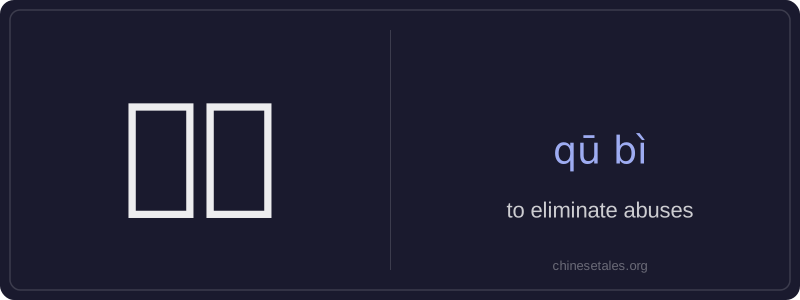
祛弊 is a formal, literary verb meaning 'to eliminate abuses' or 'to remove harmful practices or flaws.' The character 祛 (qū) means 'to dispel' or 'to remove,' often used in contexts of eliminating something negative (e.g., 祛湿 'dispel dampness' in TCM). 弊 (bì) means 'abuse,' 'malpractice,' 'defect,' or 'harmful influence' — it commonly appears in official or critical discourse about systemic problems. Together, 祛弊 emphasizes the active, deliberate removal of entrenched wrongs, especially in governance, institutions, or social practices.
This term appears frequently in political reports, reform discussions, and health policy documents — for instance, when addressing corruption, outdated regulations, or ineffective medical practices. It carries a strong normative tone, implying moral or functional improvement. While not used in casual speech, it's essential for reading official media and understanding modern Chinese socio-political vocabulary. Learners should recognize it as a compound verb that functions as a single semantic unit, typically followed by an object (e.g., 祛弊兴利 'eliminate abuses and promote benefits').
Example Sentences
Related Words
国语
‘Guó yǔ’ literally means 'national language'—
无论谁
‘无论谁’ (wú lùn shéi) is a pronoun meaning
不对
不对 (bù duì) literally combines 不 (bù), meani
外语
‘外语’ literally means ‘outside language’ —
我的
我的 (wǒ de) is a possessive pronoun meaning 'my'
违规
违规 (wéi guī) literally means 'to violate rules
亲笔
‘亲笔’ literally means ‘one’s own hand’—comb
面条
‘面条’ (miàn tiáo) literally means ‘flour str