Word Explanation
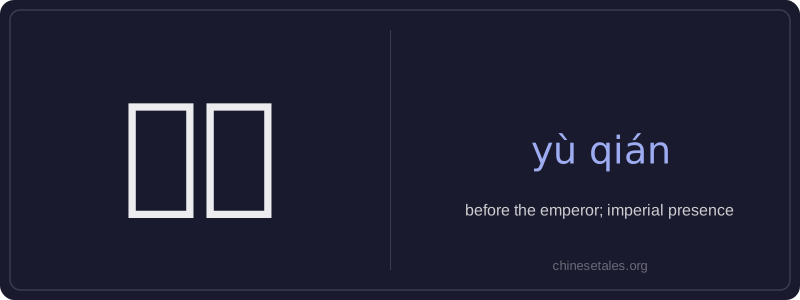
‘御前’ literally means 'before the emperor'—‘御’ (yù) is an honorific prefix meaning 'imperial' or 'of the emperor,' historically used only for things directly associated with the emperor, such as 御膳 (imperial meals) or 御笔 (the emperor’s handwriting); ‘前’ (qián) means 'in front of' or 'before.' Together, 御前 refers to the emperor’s immediate physical presence—the imperial court space where officials stood to receive orders, report matters, or perform duties.
This term carries strong historical and ceremonial weight. It appears almost exclusively in classical Chinese, historical texts, period dramas, or formal literary contexts—not in modern daily speech. Using it outside appropriate historical or stylistic frames can sound archaic or unintentionally humorous. It implies proximity to supreme authority and often connotes privilege, solemnity, or high stakes—e.g., being summoned 御前 reflects exceptional status or urgency.
Example Sentences
Related Words
国语
‘Guó yǔ’ literally means 'national language'—
无论谁
‘无论谁’ (wú lùn shéi) is a pronoun meaning
不对
不对 (bù duì) literally combines 不 (bù), meani
外语
‘外语’ literally means ‘outside language’ —
我的
我的 (wǒ de) is a possessive pronoun meaning 'my'
亲笔
‘亲笔’ literally means ‘one’s own hand’—comb
违规
违规 (wéi guī) literally means 'to violate rules
面条
‘面条’ (miàn tiáo) literally means ‘flour str