Word Explanation
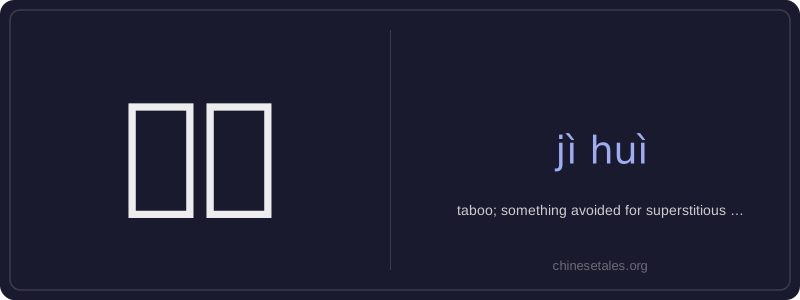
忌讳 (jì huì) is a noun meaning 'taboo' — something deliberately avoided due to superstition, tradition, or social sensitivity. The first character 忌 (jì) means 'to avoid' or 'to fear', often implying emotional aversion or caution; the second character 讳 (huì) means 'to conceal' or 'to avoid mentioning', especially names or topics considered unlucky or disrespectful. Together, they form a compound that emphasizes culturally rooted prohibitions — not just personal preferences, but shared norms with moral or spiritual weight.
This word appears frequently in discussions of Chinese customs: avoiding certain numbers (like 4), naming newborns after elders, serving specific foods at funerals, or even refraining from whistling indoors (believed to attract ghosts). It’s also used metaphorically for sensitive social topics — e.g., criticizing authority or discussing illness openly in some families. While often tied to folk beliefs, 忌讳 carries real pragmatic force in daily life and interpersonal communication.
Example Sentences
Related Words
国语
‘Guó yǔ’ literally means 'national language'—
无论谁
‘无论谁’ (wú lùn shéi) is a pronoun meaning
不对
不对 (bù duì) literally combines 不 (bù), meani
外语
‘外语’ literally means ‘outside language’ —
我的
我的 (wǒ de) is a possessive pronoun meaning 'my'
亲笔
‘亲笔’ literally means ‘one’s own hand’—comb
违规
违规 (wéi guī) literally means 'to violate rules
面条
‘面条’ (miàn tiáo) literally means ‘flour str