Word Explanation
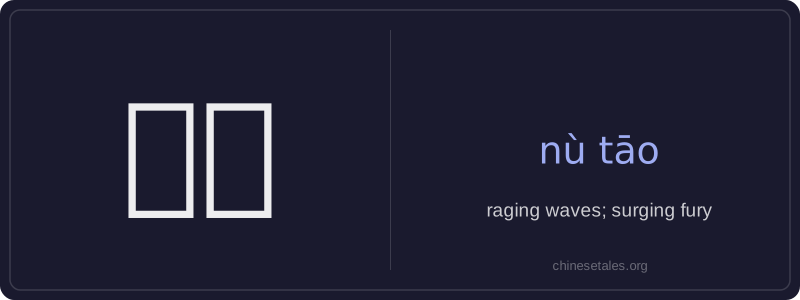
怒涛 literally combines 怒 (nù), meaning 'anger' or 'fury', and 涛 (tāo), meaning 'waves' or 'billows'. Together, it evokes the powerful, chaotic image of waves driven by violent wind—hence its primary meaning: 'raging waves'. This vivid metaphor is frequently extended to describe intense, overwhelming emotions, especially sudden or uncontrollable anger or passion, giving rise to the secondary meaning 'surging fury'.
The term carries strong literary and poetic weight. It appears in classical poetry, modern essays, news reports about natural disasters, and emotional descriptions in novels or speeches. While grammatically a noun, 怒涛 often functions as the subject or object of verbs like 卷起 (to whip up), 掀起 (to stir up), or 平息 (to subside), and is rarely used in casual daily speech—it’s more common in written or formal spoken contexts where dramatic emphasis is needed.
Example Sentences
Related Words
国语
‘Guó yǔ’ literally means 'national language'—
无论谁
‘无论谁’ (wú lùn shéi) is a pronoun meaning
不对
不对 (bù duì) literally combines 不 (bù), meani
外语
‘外语’ literally means ‘outside language’ —
我的
我的 (wǒ de) is a possessive pronoun meaning 'my'
亲笔
‘亲笔’ literally means ‘one’s own hand’—comb
违规
违规 (wéi guī) literally means 'to violate rules
面条
‘面条’ (miàn tiáo) literally means ‘flour str