Word Explanation
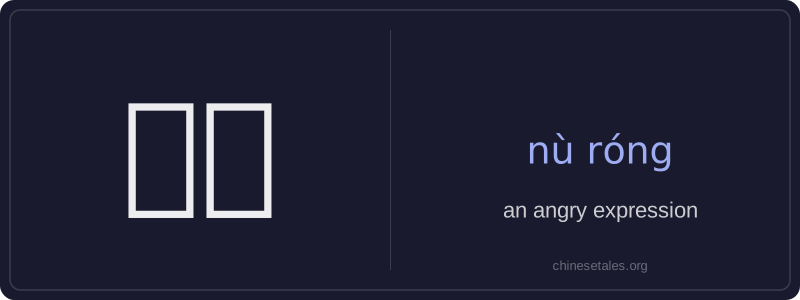
怒容 (nù róng) literally combines 怒 (nù), meaning 'anger' or 'to be angry', and 容 (róng), meaning 'appearance', 'countenance', or 'expression'. Together, they form a noun meaning 'an angry expression' — specifically the visible facial manifestation of anger, such as furrowed brows, narrowed eyes, or a tightened jaw. It emphasizes the outward, observable signs rather than the internal feeling itself.
This term is commonly used in descriptive writing, storytelling, or formal speech to convey someone’s emotional state through their face. It often appears in literary contexts or news reports describing reactions to injustice, betrayal, or provocation. While not slangy or overly formal, 怒容 carries a slightly literary or heightened tone compared to simpler alternatives like 生气的样子 (shēngqì de yàngzi). It is typically used with verbs like 露出 (lùchū, 'to show'), 呈现 (chéngxiàn, 'to display'), or 浮现 (fúxiàn, 'to appear') to indicate the emergence of the expression.
Example Sentences
Related Words
国语
‘Guó yǔ’ literally means 'national language'—
无论谁
‘无论谁’ (wú lùn shéi) is a pronoun meaning
不对
不对 (bù duì) literally combines 不 (bù), meani
外语
‘外语’ literally means ‘outside language’ —
我的
我的 (wǒ de) is a possessive pronoun meaning 'my'
亲笔
‘亲笔’ literally means ‘one’s own hand’—comb
违规
违规 (wéi guī) literally means 'to violate rules
面条
‘面条’ (miàn tiáo) literally means ‘flour str