Word Explanation
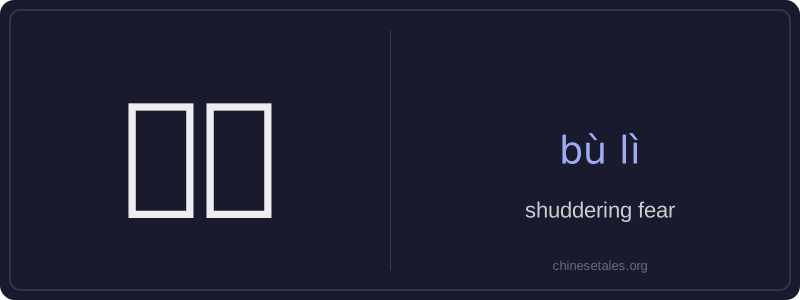
怖栗 (bù lì) is a literary, two-character noun meaning 'shuddering fear'—a visceral, physical reaction to terror, often involving trembling or goosebumps. The first character 怖 means 'fear' or 'dread', while the second 栗 originally refers to the chestnut tree but here functions phonetically and semantically to evoke 'trembling' (as in 栗然, lì rán, 'to shiver with fear'). Together, they intensify each other, creating a compound that emphasizes both the emotional and bodily dimensions of deep fright.
This word appears mainly in formal writing, classical allusions, or descriptive prose—not in everyday speech. It’s frequently used to depict reactions to supernatural phenomena, sudden danger, or overwhelming awe (e.g., before nature’s power or moral gravity). Because it’s stylistically elevated, learners should avoid using it in casual conversation; instead, it’s best suited for written narratives, essays, or dramatic dialogue where heightened emotional intensity is intended.
Example Sentences
Related Words
国语
‘Guó yǔ’ literally means 'national language'—
无论谁
‘无论谁’ (wú lùn shéi) is a pronoun meaning
不对
不对 (bù duì) literally combines 不 (bù), meani
外语
‘外语’ literally means ‘outside language’ —
我的
我的 (wǒ de) is a possessive pronoun meaning 'my'
亲笔
‘亲笔’ literally means ‘one’s own hand’—comb
违规
违规 (wéi guī) literally means 'to violate rules
面条
‘面条’ (miàn tiáo) literally means ‘flour str