Word Explanation
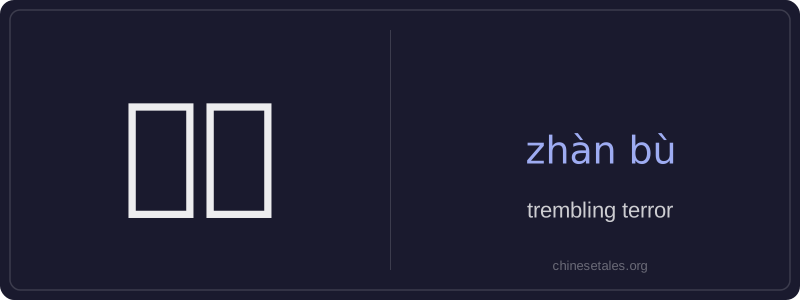
‘战怖’ is a literary, formal noun meaning 'trembling terror'—a visceral, physical fear that causes involuntary shaking. The first character 战 (zhàn) literally means 'to tremble' or 'to shiver', evoking bodily reaction; the second, 怖 (bù), means 'fear' or 'dread'. Together, they intensify each other: not just mental anxiety, but fear so profound it manifests physically—chills, quaking limbs, or breathlessness. This compound is rarely used in casual speech and appears most often in classical texts, modern literary prose, or dramatic descriptions of extreme psychological states.
It carries a strong emotional weight and often implies awe-inspiring or overwhelming danger—such as facing a natural disaster, supernatural presence, or moral crisis. Because it emphasizes somatic response, it’s distinct from abstract terms like 恐惧 (kǒngjù, 'fear') or 害怕 (hàipà, 'to be afraid'). Its tone is solemn and elevated, making it unsuitable for everyday conversation or light contexts.
Example Sentences
Related Words
国语
‘Guó yǔ’ literally means 'national language'—
无论谁
‘无论谁’ (wú lùn shéi) is a pronoun meaning
不对
不对 (bù duì) literally combines 不 (bù), meani
外语
‘外语’ literally means ‘outside language’ —
我的
我的 (wǒ de) is a possessive pronoun meaning 'my'
亲笔
‘亲笔’ literally means ‘one’s own hand’—comb
违规
违规 (wéi guī) literally means 'to violate rules
面条
‘面条’ (miàn tiáo) literally means ‘flour str