Word Explanation
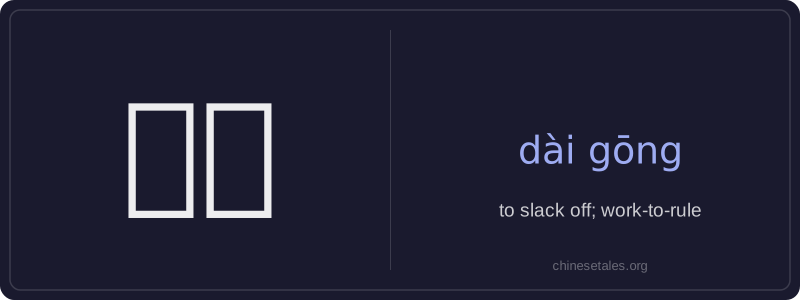
‘怠工’ (dài gōng) literally combines ‘怠’ (dài), meaning ‘negligent’, ‘slack’, or ‘lax’, and ‘工’ (gōng), meaning ‘work’ or ‘labor’. Together, it describes the deliberate act of reducing effort or productivity at work—not quitting, but working minimally, slowly, or strictly by the book to protest conditions or express dissatisfaction. It’s often used in labor contexts, such as when employees refuse overtime, follow every rule to the letter to slow output, or perform tasks with visible apathy.
Unlike casual slacking, ‘怠工’ carries a subtle connotation of intentional, collective, or principled resistance—though it can also describe individual disengagement in informal settings. It’s more formal and critical than everyday terms like ‘偷懒’ (tōu lǎn, ‘to shirk’), and is frequently found in news reports, workplace discussions, or social commentary. The term is neutral in grammar but leans slightly negative or critical depending on context and speaker attitude.
Example Sentences
Related Words
国语
‘Guó yǔ’ literally means 'national language'—
无论谁
‘无论谁’ (wú lùn shéi) is a pronoun meaning
不对
不对 (bù duì) literally combines 不 (bù), meani
外语
‘外语’ literally means ‘outside language’ —
我的
我的 (wǒ de) is a possessive pronoun meaning 'my'
亲笔
‘亲笔’ literally means ‘one’s own hand’—comb
违规
违规 (wéi guī) literally means 'to violate rules
面条
‘面条’ (miàn tiáo) literally means ‘flour str